Praktika's talking head solo ad is a 45-second saas & software video creative decoded by Heista into 6 structural beats with 1 total cuts. Praktika's full brand intelligence
Facebook Ad
0:45
Praktika
Heisted: Aug 4, 2026
PATTERNMAP™
Loading PatternMap...
Ad Blueprint
Talking Head Solo
CategorySaas Software
AngleHow To Tutorial
NarrativeProduct First
IntentDiscovery Education Driver
Hook Type
Direct Question Hook
4.2sDuration
1Shots
44.6sAvg Shot
Energy
Psychology
Loss Aversion
Behavioral ApproachPeer Recommend
Negative Future Projection
Fear Of Loss
Risk Priming
Every winning ad has a formula. Heista decodes it in seconds.
Praktika Ad Decoded — Direct Question Hook Analysis (45s)
Praktika's talking head solo ad is a 45-second saas & software creative decoded by Heista into 6 structural beats. It opens with a Direct Question hook — This leverages Direct Question Hook because the brain treats “Can you speak Spanish?” as an answerable prompt, pulling the viewer into active self-assessment instead of passive viewing. It also creates a Completion Bias via the follow-up ladder (“OK, what Spanish words do you know? Hola.”): once you’re mentally participating, you’re likely to keep watching to see what the test asks next and how “Hola” fits the larger point. The psychological mission is Loss Aversion: The viewer feels a light sense of urgency and a small fear of wasting time without trying the AI tutor, making the download feel safer and more worthwhile. The ad has 1 cuts at an average of 44.6s per cut, with an average beat duration of 7.5s.
Key Takeaways
- Opens with a Direct Question hook
- Activates Loss Aversion psychology
- Part of Praktika's full ad strategy
- 1 cuts, averaging 44.6s per cut
Overview
Direct Question Hook
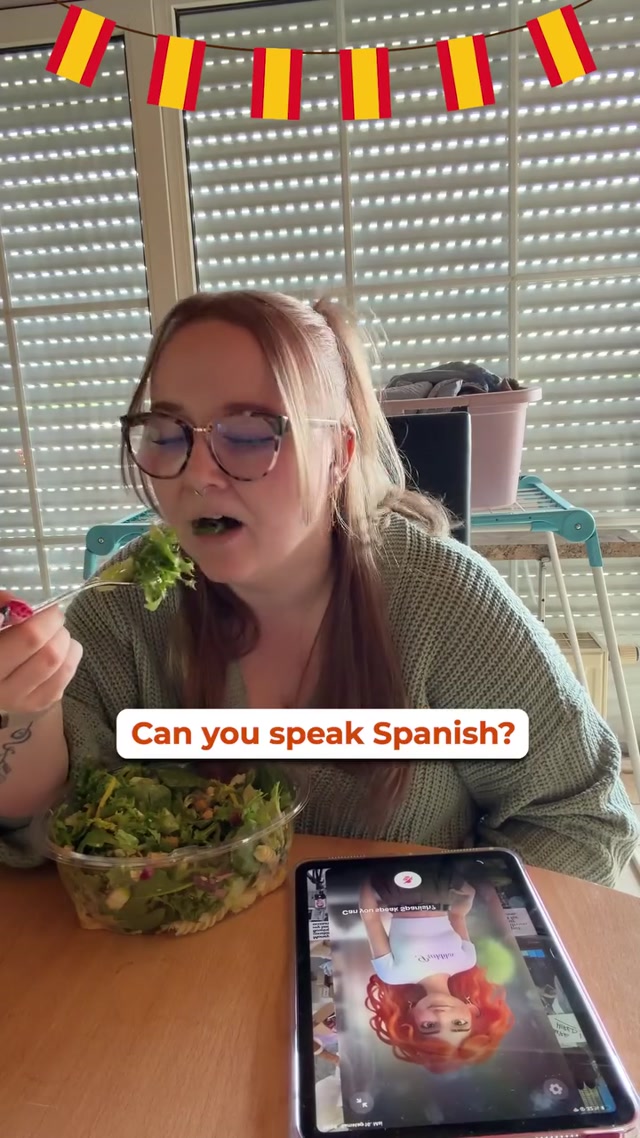
This leverages Direct Question Hook because the brain treats “Can you speak Spanish?” as an answerable prompt, pulling the viewer into active self-assessment instead of passive viewing. It also creates a Completion Bias via the follow-up ladder (“OK, what Spanish words do you know? Hola.”): once you’re mentally participating, you’re likely to keep watching to see what the test asks next and how “Hola” fits the larger point. Direct Question hook deep-dive
Beat-by-Beat Breakdown
Beat 2 (0:00-0:04) — Direct Question Hook: The speaker opens by asking a direct, checkable question: “Can you speak Spanish?” then immediately answers/qualifies it (“Ah, un poco. OK, what Spanish words do you know? Hola.”). That question forces the viewer to self-evaluate in real time and sets up the next “name the words” moment.
Beat 3 (0:04-0:10) — Process Setup: The speaker sets up a simple classroom-style call-and-response correction routine: “And what do you say when you make a mistake? … Repeat after me, lo siento. Lo siento.” Then they place the learner into a specific level target: “Your level is A1.” This turns the viewer from just hearing phrases into following a repeat-after workflow where the “mistake” moment becomes the trigger for the correct response.
Beat 4 (0:10-0:16) — Inefficiency Pain: It dismisses an overly hard learning path by stating the current approach is basically “just watch series with subtitles” and then reframes it as sufficient: “I don't really speak Spanish. I just watch series with subtitles. That's enough to start.” This reduces the tension of wasted effort by telling the viewer their current low-effort method isn’t failing—they can start immediately and keep practicing (“You can practice with AI tutors like me.”).
Beat 5 (0:16-0:27) — Cost/Benefit Reframe: The pitch reframes the cost/risks of trying AI tutoring—“But with an AI? You won't lose anything by trying”—while stacking the upside promise: “You'll start speaking Spanish much faster.” It then uses a low-friction trial close: “it will be worth it.”
Beat 6 (0:27-0:37) — Stop → Start Shift: It tells the viewer to stop one common approach and switch to a better interaction style: “but you better not give orders to your new maestra.” This reframes learning Spanish as something you do *with* the teacher, not through control—so the viewer’s attention shifts from “what to say/do to manage results” to “how to behave so the lesson can work.”
Beat 7 (0:37-0:44) — Redirect: The creator gives a direct download instruction: “Go download Practica right now.” The beat then adds a push to move immediately with “OK, let's go.”
Behavioral Psychology
This ad activates Loss Aversion as its primary behavioral mission. The viewer feels a light sense of urgency and a small fear of wasting time without trying the AI tutor, making the download feel safer and more worthwhile. Loss Aversion behavioral mission
Structural Fingerprint
Duration: 45 seconds. Beat count: 6. Total cuts: 1. Average beat duration: 7.5s. Average cut duration: 44.6s. Average visual energy: 1/10.
Frequently Asked Questions
Why does this Praktika ad work? This Praktika talking head solo ad opens with a Direct Question hook that captures attention in the first 3 seconds. The psychological architecture activates Loss Aversion across 6 structural beats, each contributing a specific persuasion mechanism.
What hook does Praktika use in this ad? Praktika opens with a Direct Question hook. This leverages Direct Question Hook because the brain treats “Can you speak Spanish?” as an answerable prompt, pulling the viewer into active self-assessment instead of passive viewing. It also creates a Completion Bias via the follow-up ladder (“OK, what Spanish words do you know? Hola.”): once you’re mentally participating, you’re likely to keep watching to see what the test asks next and how “Hola” fits the larger point.
What psychology does this Praktika ad activate? This ad activates Loss Aversion as its primary behavioral mission. The viewer feels a light sense of urgency and a small fear of wasting time without trying the AI tutor, making the download feel safer and more worthwhile.
How long is this Praktika ad and what's the structure? This ad runs 45 seconds with 6 structural beats and 1 cuts. Average cut duration is 44.6s. The pattern flow follows a full format structure common in talking head solo ads.
What platform is this Praktika ad running on? This talking head solo ad is running on facebook. The saas & software vertical typically sees strong performance on this platform for talking head solo creative structures.
What makes this different from other saas & software ads? Most saas & software ads lean on generic format templates. Praktika's version uses a distinct Direct Question hook structure paired with Loss Aversion — a combination that over-indexes in high-performing saas & software creative.