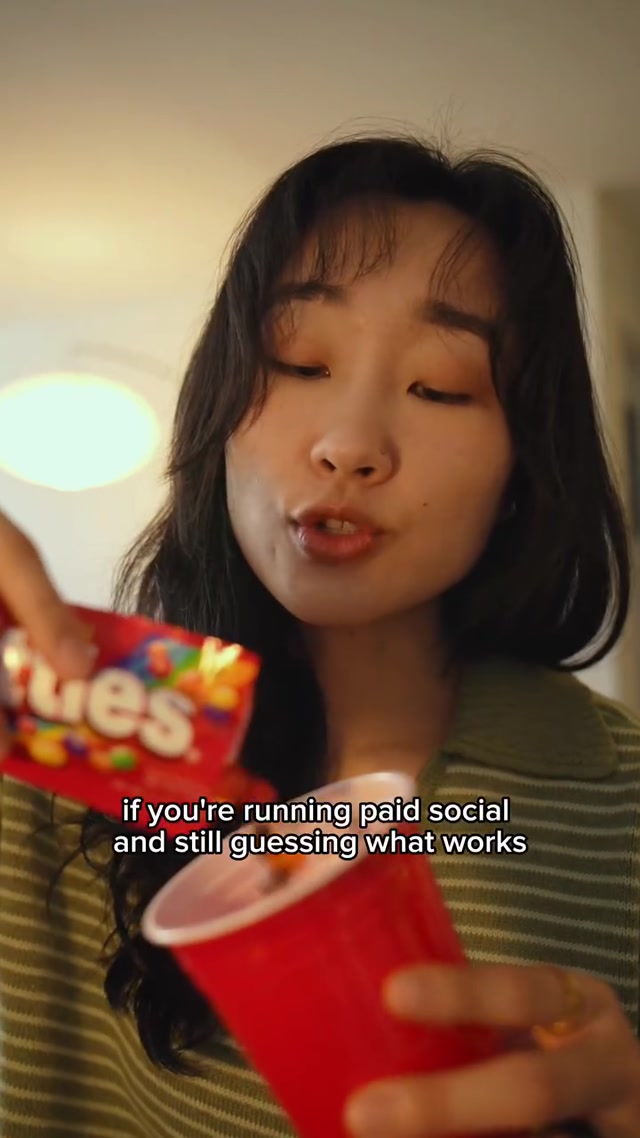
Brevo PushOwl's talking head b-roll ad is a 54-second saas & software video creative decoded by Heista into 7 structural beats with 29 total cuts. Brevo PushOwl's full brand intelligence
PATTERNMAP™
Loading PatternMap...
Ad Blueprint
Talking Head B-Roll
CategorySaas Software
AngleOffer Urgency
NarrativePain To Relief
IntentDiscovery Education Driver
Hook Type
Contrast Setup
6.5sDuration
4Shots
2.0sAvg Shot
Energy
Cut Points
2.0s3.9s5.9s
Psychology
Loss Aversion
Behavioral ApproachSell Product Direct
Negative Future Projection
Risk Priming
Scarcity Cue
Avoidance Trigger
Fear Of Loss
Every winning ad has a formula. Heista decodes it in seconds.
Brevo PushOwl Ad Decoded — Contrast Setup Hook Analysis (54s)
Brevo PushOwl's talking head b-roll ad is a 54-second saas & software creative decoded by Heista into 7 structural beats. It opens with a Contrast Setup hook — This leverages Contrast Setup by making the viewer mentally compare two states—current monthly expense vs. the replacement outcome—so the “MagicFit” option feels like the obvious next step. It also uses Loss Aversion: “every single month” makes the cost feel continuous and avoidable, increasing urgency to keep watching for the replacement details. The psychological mission is Loss Aversion: The viewer feels urgency to stop ongoing monthly costs and avoid missing the chance to get free credits, making the switch feel immediately worthwhile. The ad has 29 cuts at an average of 2s per cut, with an average beat duration of 7.7s.
Key Takeaways
- Opens with a Contrast Setup hook
- Activates Loss Aversion psychology
- Part of Brevo PushOwl's full ad strategy
- 29 cuts, averaging 2s per cut
Overview
Contrast Setup Hook
This leverages Contrast Setup by making the viewer mentally compare two states—current monthly expense vs. the replacement outcome—so the “MagicFit” option feels like the obvious next step. It also uses Loss Aversion: “every single month” makes the cost feel continuous and avoidable, increasing urgency to keep watching for the replacement details. Contrast Setup hook deep-dive
Beat-by-Beat Breakdown
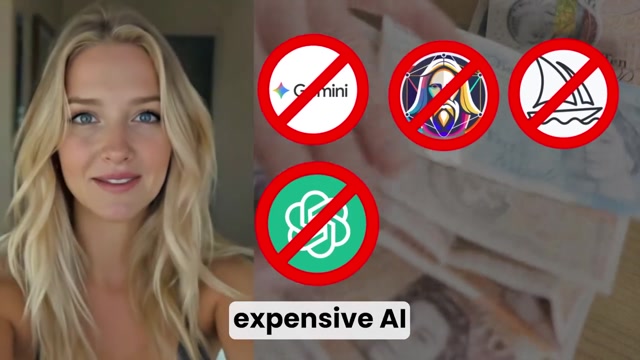
Beat 2 (0:00-0:06) — Contrast Setup: It sets up a direct before/after contrast: “Stop paying expensive AI video tools every single month” versus “replace them all using MagicFit.” This frames the rest of the video as a solution to a specific ongoing cost problem, not a general discussion.
Beat 3 (0:06-0:14) — Inefficiency Pain: It spotlights wasted effort and cost by claiming you can “Create hundreds of image and video content for a one-time cost.” That contrast (“hundreds” vs “one-time”) creates tension around the viewer’s likely experience of paying repeatedly or spending too much to produce content.
Beat 4 (0:14-0:28) — Micro Walkthrough: It gives a quick, step-by-step workflow for making ads from one image: “Drop in your product image, choose how you want it to look and feel, adjust a few key parameters, and let MagicFit take over.” This compresses the creation process into a simple sequence the viewer can mentally simulate immediately.
Beat 5 (0:28-0:39) — Feature Cascade: It rapidly cascades what the generator can output: “high-impact product visuals” that “adapt…into different creative styles—from natural UGC formats to influencer-style showcases, sliding product animations, cinematic shots, and clean static ads.” This stacks multiple concrete output formats back-to-back so the viewer instantly sees breadth of capability, not just one example.
Beat 6 (0:39-0:46) — The Easy Way: It positions MagicFit as the simpler way to keep winning attention by automatically expanding your content into “multiple formats and sizes,” which “giv[es] you more angles, more creatives, and more ways to win attention.” In this mid/late moment, the message reframes effort as unnecessary because the tool keeps generating options for you as you go.
Beat 7 (0:46-0:51) — Feature Cascade: It rapidly stacks use-cases to show breadth: “Explore and clone from thousands of templates across UGC, e-commerce, ads, photography, and design.” Then it adds outcome claims in the same burst: “Test more, create faster, and scale with MagicFit.” This creates a dense “everything it covers” value moment right in the middle of the pitch.
Beat 8 (0:51-0:53) — Try This Today: The close issues an immediate, low-friction action: “Grab your free credits fast.” It tells the viewer to take a quick step right now rather than wait or think about it later.
Behavioral Psychology
This ad activates Loss Aversion as its primary behavioral mission. The viewer feels urgency to stop ongoing monthly costs and avoid missing the chance to get free credits, making the switch feel immediately worthwhile. Loss Aversion behavioral mission
Structural Fingerprint
Duration: 54 seconds. Beat count: 7. Total cuts: 29. Average beat duration: 7.7s. Average cut duration: 2s. Average visual energy: 7.4/10.
Frequently Asked Questions
Why does this Brevo PushOwl ad work? This Brevo PushOwl talking head b-roll ad opens with a Contrast Setup hook that captures attention in the first 3 seconds. The psychological architecture activates Loss Aversion across 7 structural beats, each contributing a specific persuasion mechanism.
What hook does Brevo PushOwl use in this ad? Brevo PushOwl opens with a Contrast Setup hook. This leverages Contrast Setup by making the viewer mentally compare two states—current monthly expense vs. the replacement outcome—so the “MagicFit” option feels like the obvious next step. It also uses Loss Aversion: “every single month” makes the cost feel continuous and avoidable, increasing urgency to keep watching for the replacement details.
What psychology does this Brevo PushOwl ad activate? This ad activates Loss Aversion as its primary behavioral mission. The viewer feels urgency to stop ongoing monthly costs and avoid missing the chance to get free credits, making the switch feel immediately worthwhile.
How long is this Brevo PushOwl ad and what's the structure? This ad runs 54 seconds with 7 structural beats and 29 cuts. Average cut duration is 2s. The pattern flow follows a full format structure common in talking head b-roll ads.
What platform is this Brevo PushOwl ad running on? This talking head b-roll ad is running on facebook. The saas & software vertical typically sees strong performance on this platform for talking head b-roll creative structures.
What makes this different from other saas & software ads? Most saas & software ads lean on generic format templates. Brevo PushOwl's version uses a distinct Contrast Setup hook structure paired with Loss Aversion — a combination that over-indexes in high-performing saas & software creative.