Luma AI's talking head screen ad is a 47-second saas & software video creative decoded by Heista into 7 structural beats with 12 total cuts. Luma AI's full brand intelligence
PATTERNMAP™
Loading PatternMap...
Ad Blueprint
Talking Head Screen
CategorySaas Software
AngleHow To Tutorial
NarrativeProduct First
IntentDiscovery Education Driver
Hook Type
Tribe Call-out
6.5sDuration
2Shots
3.3sAvg Shot
Energy
Cut Points
3.9s
Psychology
Threat Reduction
Behavioral ApproachSoft Sell Value Frame
Reassurance Statement
Uncertainty Resolution
Fear Cancellation
Soothing Tone
Every winning ad has a formula. Heista decodes it in seconds.
Luma AI Ad Decoded — Tribe Call-Out Hook Analysis (47s)
Luma AI's talking head screen ad is a 47-second saas & software creative decoded by Heista into 7 structural beats. It opens with a Tribe Call-Out hook — This leverages Identity/Tribe Call-Out: the phrase “If you're still…” mirrors the viewer’s current routine, creating instant self-recognition and relevance. It also uses Specificity Bias by naming a concrete schedule (“5am before noon”), which makes the match feel unusually accurate—so the viewer stays to see how the “AI tool” fixes their exact problem. The psychological mission is Threat Reduction: The viewer feels relief because the workflow stops feeling fragmented and the tool reliably keeps context, making the next steps feel clear and low-friction. The ad has 12 cuts at an average of 4.1s per cut, with an average beat duration of 6.7s.
Key Takeaways
- Opens with a Tribe Call-Out hook
- Activates Threat Reduction psychology
- Part of Luma AI's full ad strategy
- 12 cuts, averaging 4.1s per cut
Overview
Tribe Call-Out Hook
This leverages Identity/Tribe Call-Out: the phrase “If you're still…” mirrors the viewer’s current routine, creating instant self-recognition and relevance. It also uses Specificity Bias by naming a concrete schedule (“5am before noon”), which makes the match feel unusually accurate—so the viewer stays to see how the “AI tool” fixes their exact problem. Tribe Call-Out hook deep-dive
Beat-by-Beat Breakdown
Beat 2 (0:00-0:06) — Tribe Call-Out: It calls out a specific “you” group by describing their exact behaviour: “If you're still switching between 5am before noon…”. Then it immediately tags that group with a solution promise: “well this AI tool is for you.” This makes the viewer feel the video is speaking directly to their situation, not a general audience.
Beat 3 (0:06-0:16) — Authority Setup: The speaker establishes credibility by stating their professional role and daily work: “I work as a creative director” and that “most of my day is spent developing campaign ideas, refining concepts, and testing different creative directions.” This positions them as someone who repeatedly practices and evaluates creative decision-making, not a random commentator.
Beat 4 (0:16-0:26) — Inefficiency Pain: The speaker describes an inefficient workflow: “strategy in one place, visual idea in another tool, and video test somewhere else,” plus “constantly switching between platforms just to move a project forward.” This paints the current process as fragmented and friction-heavy, making the viewer feel the cost of all that context switching in real time.
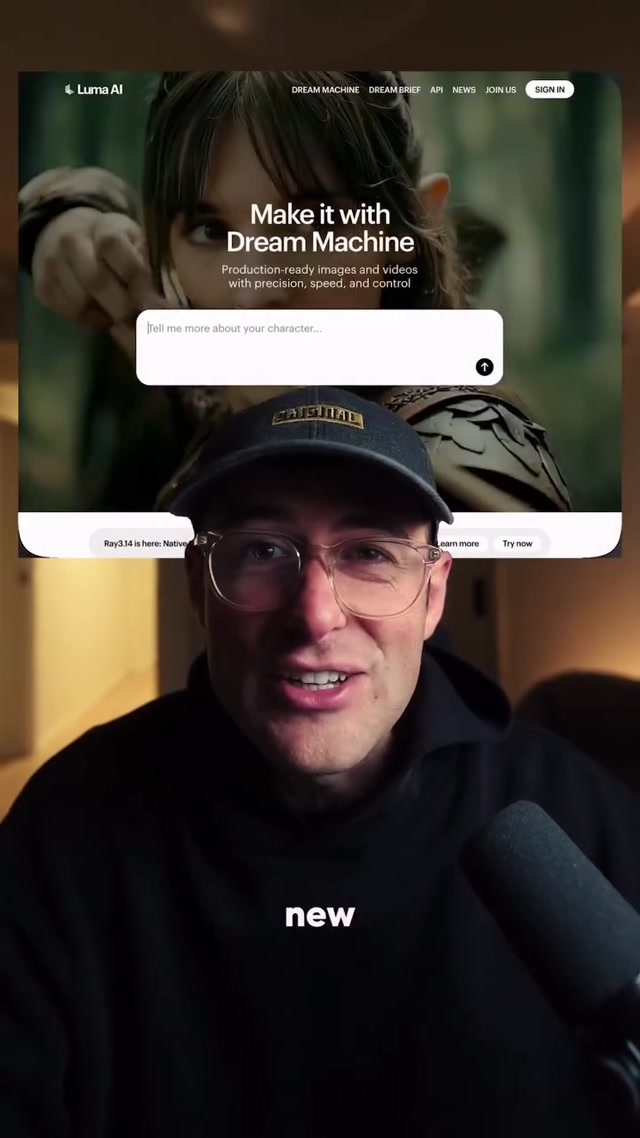
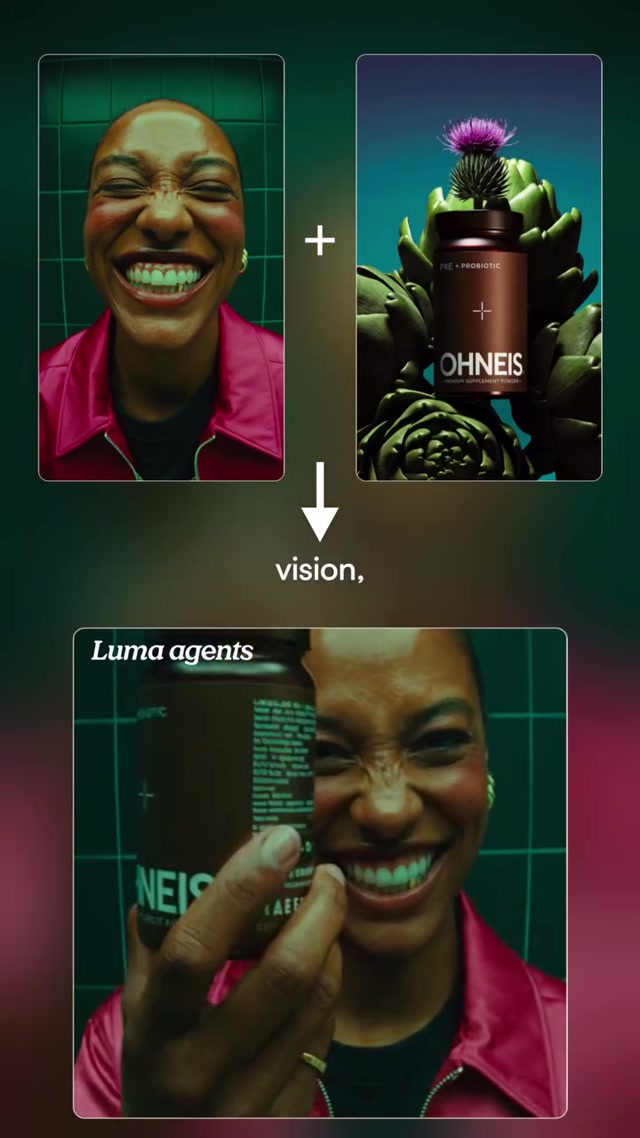
Beat 5 (0:26-0:36) — Tool Demonstration: It demonstrates a specific workflow inside Luma: “I start most projects directly inside Luma… I’ll drop the brief and my early idea into the canvas. And Luma agent helps evaluate the concept and suggest stronger direction.” This shows the exact sequence of actions (brief → canvas → agent evaluation → stronger direction) the viewer can picture using immediately.
Beat 6 (0:36-0:43) — Function Demonstration: It demonstrates the agent’s “context retention” function across the workflow: “the agent keeps the context of the whole project” so that “later in the day… it already understands the tone, the audience, and the direction we defined earlier.” This makes the capability feel like an automatic continuity system rather than a one-off response.
Beat 7 (0:43-0:45) — The Easy Way: It offers a simpler “one-stop” solution: “a creative copilot across the entire day” and immediately tells the viewer what to do next: “try Luma today.” This reframes the task from managing creativity all day manually into using a single tool that handles the whole span, right at the moment the viewer is deciding whether to act.
Beat 8 (0:45-0:46) — Try This Today: The creator ends with a direct micro-action: “Try Luma today.” This tells the viewer exactly what to do immediately, right after the main content lands.
Behavioral Psychology
This ad activates Threat Reduction as its primary behavioral mission. The viewer feels relief because the workflow stops feeling fragmented and the tool reliably keeps context, making the next steps feel clear and low-friction. Threat Reduction behavioral mission
Structural Fingerprint
Duration: 47 seconds. Beat count: 7. Total cuts: 12. Average beat duration: 6.7s. Average cut duration: 4.1s. Average visual energy: 2.9/10.
Frequently Asked Questions
Why does this Luma AI ad work? This Luma AI talking head screen ad opens with a Tribe Call-Out hook that captures attention in the first 3 seconds. The psychological architecture activates Threat Reduction across 7 structural beats, each contributing a specific persuasion mechanism.
What hook does Luma AI use in this ad? Luma AI opens with a Tribe Call-Out hook. This leverages Identity/Tribe Call-Out: the phrase “If you're still…” mirrors the viewer’s current routine, creating instant self-recognition and relevance. It also uses Specificity Bias by naming a concrete schedule (“5am before noon”), which makes the match feel unusually accurate—so the viewer stays to see how the “AI tool” fixes their exact problem.
What psychology does this Luma AI ad activate? This ad activates Threat Reduction as its primary behavioral mission. The viewer feels relief because the workflow stops feeling fragmented and the tool reliably keeps context, making the next steps feel clear and low-friction.
How long is this Luma AI ad and what's the structure? This ad runs 47 seconds with 7 structural beats and 12 cuts. Average cut duration is 4.1s. The pattern flow follows a full format structure common in talking head screen ads.
What platform is this Luma AI ad running on? This talking head screen ad is running on facebook. The saas & software vertical typically sees strong performance on this platform for talking head screen creative structures.
What makes this different from other saas & software ads? Most saas & software ads lean on generic format templates. Luma AI's version uses a distinct Tribe Call-Out hook structure paired with Threat Reduction — a combination that over-indexes in high-performing saas & software creative.