SideShift 's street interview ad is a 91-second saas & software video creative decoded by Heista into 7 structural beats with 28 total cuts. SideShift 's full brand intelligence
Facebook Ad
1:31
SideShift
Heisted: Oct 19, 2026
PATTERNMAP™
Loading PatternMap...
Ad Blueprint
Street Interview
CategorySaas Software
AngleValue Stack
NarrativeCategory Reframe
IntentDiscovery Education Driver
Hook Type
Direct Question Hook
9.5sDuration
13Shots
1.0sAvg Shot
Energy
Cut Points
1.0s1.1s1.1s1.1s1.2s1.3s1.3s1.3s1.4s3.6s6.0s8.0s
Psychology
Intrinsic Motivation
Behavioral ApproachSell Product Direct
Challenge Callout
Internal Drive Activation
Mindset Shift Cue
Every winning ad has a formula. Heista decodes it in seconds.
SideShift Ad Decoded — Direct Question Hook Analysis (91s)
SideShift 's street interview ad is a 91-second saas & software creative decoded by Heista into 7 structural beats. It opens with a Direct Question hook — This leverages Direct Question Hook dynamics—once you’re asked for an opinion (“your opinion”), Reciprocity Norm kicks in because you feel you’ve been invited to contribute, not just watch. It also uses Commitment/Consistency Pressure: answering mentally is an easy first step toward taking the speaker’s request seriously, which increases the chance you keep listening for the context behind the company and why your input matters. The psychological mission is Intrinsic Motivation: The viewer feels empowered to act because the pitch reframes the problem as fixable and the next step as an immediate way to regain control and speed up growth. The ad has 28 cuts at an average of 3s per cut, with an average beat duration of 13s.
Key Takeaways
- Opens with a Direct Question hook
- Activates Intrinsic Motivation psychology
- Part of SideShift 's full ad strategy
- 28 cuts, averaging 3s per cut
Overview
Direct Question Hook
This leverages Direct Question Hook dynamics—once you’re asked for an opinion (“your opinion”), Reciprocity Norm kicks in because you feel you’ve been invited to contribute, not just watch. It also uses Commitment/Consistency Pressure: answering mentally is an easy first step toward taking the speaker’s request seriously, which increases the chance you keep listening for the context behind the company and why your input matters. Direct Question hook deep-dive
Beat-by-Beat Breakdown
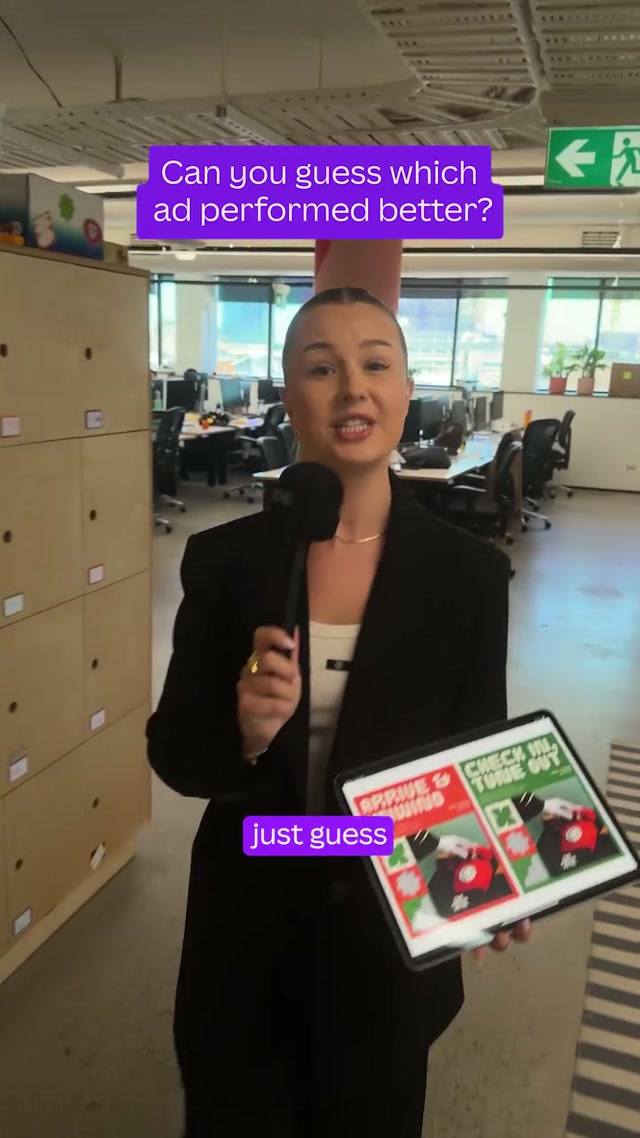
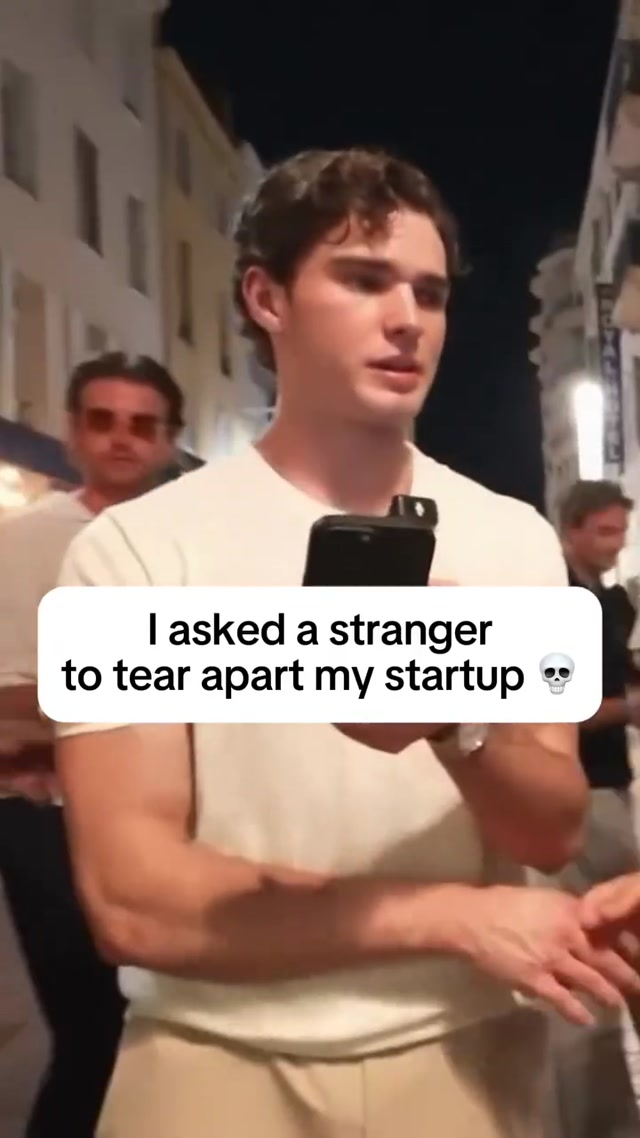
Beat 2 (0:00-0:09) — Direct Question Hook: It directly asks the viewer for a specific engagement action: “Can I get your opinion on my company?” This frames the interaction as a two-way decision point right away, turning the viewer from a passive watcher into an “answerer.”
Beat 3 (0:09-0:29) — Scene Setter: It establishes situational context by describing the creator-marketing setup in one concrete scenario: “we run a creator marketplace” that “connects micro-creators with brands,” specializing in “high-volume content,” illustrated as “it’s like Clip, but with real creators who make new accounts and post actual content.”
Beat 4 (0:29-0:44) — Dissonance Spark: It questions the premise that “affiliate marketing through clippers” is a great strategy by undercutting the belief with an explicit contradiction: “a not-great idea—it's not revolutionary.” It then pressures the comparison by asking “what’s the point… versus just joining TikTok Shop Affiliate?”, forcing the viewer to reconcile the perceived value vs the obvious alternative.
Beat 5 (0:44-1:04) — Feature Cascade: This beat rapidly stacks the kinds of work and examples the team covers: “consumer products… Wrapwood and Lovable,” “different economics like commissions and GMD Max versus retainers,” and “software with big retainers… posting and consumer/mobile/peptide apps.” The clause-skipping, list-like structure forces the viewer to build a mental map of breadth immediately, not just hear a single claim.
Beat 6 (1:04-1:18) — Community Endorsement: This beat uses “massive creator army… work with influencers… the other person agrees” to validate the strategy through broad third-party endorsement—pairing creator-scale (“massive creator army”) with influencer collaboration and an external agreement (“the other person agrees it’s like a clipping network”). It frames the method as a widely shared interpretation rather than a single-person claim.
Beat 7 (1:18-1:26) — System is the Problem: It reframes the bottleneck from the team’s effort to the environment/process they’re stuck in: “managing the machine” is positioned as the cause of the lack of “actually scaling the channel.” Then it asserts remediation via a systemic fix: “this system changes how you scale.”
Beat 8 (1:26-1:31) — Redirect: The close uses a link-and-call prompt to route the viewer off-platform: “click the link below for 50 killer creators to apply overnight” and “book a call below—we’ll be in touch.”
Behavioral Psychology
This ad activates Intrinsic Motivation as its primary behavioral mission. The viewer feels empowered to act because the pitch reframes the problem as fixable and the next step as an immediate way to regain control and speed up growth. Intrinsic Motivation behavioral mission
Structural Fingerprint
Duration: 91 seconds. Beat count: 7. Total cuts: 28. Average beat duration: 13s. Average cut duration: 3s. Average visual energy: 4.1/10.
Frequently Asked Questions
Why does this SideShift ad work? This SideShift street interview ad opens with a Direct Question hook that captures attention in the first 3 seconds. The psychological architecture activates Intrinsic Motivation across 7 structural beats, each contributing a specific persuasion mechanism.
What hook does SideShift use in this ad? SideShift opens with a Direct Question hook. This leverages Direct Question Hook dynamics—once you’re asked for an opinion (“your opinion”), Reciprocity Norm kicks in because you feel you’ve been invited to contribute, not just watch. It also uses Commitment/Consistency Pressure: answering mentally is an easy first step toward taking the speaker’s request seriously, which increases the chance you keep listening for the context behind the company and why your input matters.
What psychology does this SideShift ad activate? This ad activates Intrinsic Motivation as its primary behavioral mission. The viewer feels empowered to act because the pitch reframes the problem as fixable and the next step as an immediate way to regain control and speed up growth.
How long is this SideShift ad and what's the structure? This ad runs 91 seconds with 7 structural beats and 28 cuts. Average cut duration is 3s. The pattern flow follows a full format structure common in street interview ads.
What platform is this SideShift ad running on? This street interview ad is running on facebook. The saas & software vertical typically sees strong performance on this platform for street interview creative structures.
What makes this different from other saas & software ads? Most saas & software ads lean on generic format templates. SideShift 's version uses a distinct Direct Question hook structure paired with Intrinsic Motivation — a combination that over-indexes in high-performing saas & software creative.