Pulsio's voiceover b-roll ad is a 33-second fitness video creative decoded by Heista into 6 structural beats with 20 total cuts. Pulsio's full brand intelligence · Fitness ad hooks
Facebook Ad
0:33
Pulsio
Heisted: Jul 10, 2026
PATTERNMAP™
Loading PatternMap...
Ad Blueprint
Voiceover B-Roll
CategoryFitness
AngleComparison Vs
NarrativePrice Anchor
IntentMechanism Reveal
Hook Type
Contrast Setup
3.6sDuration
2Shots
2.3sAvg Shot
Energy
Cut Points
2.6s
Psychology
Loss Aversion
Behavioral ApproachSell Product Direct
Risk Priming
Avoidance Trigger
Fear Of Loss
Negative Future Projection
Scarcity Cue
Every winning ad has a formula. Heista decodes it in seconds.
Pulsio Ad Decoded — Contrast Setup Hook Analysis (33s)
Pulsio's voiceover b-roll ad is a 33-second fitness creative decoded by Heista into 6 structural beats. It opens with a Contrast Setup hook — This leverages Contrast Setup by defining two opposing states (low price vs high performance) and then immediately questioning whether the worse-case link is true. The “But does this mean…” line activates Cognitive Dissonance/Belief Tension: viewers are prompted to reconcile the common assumption that lower cost implies proportionally lower quality. That uncertainty keeps them watching because they’re waiting for the resolution to the cheap-vs-goodness contrast. The psychological mission is Loss Aversion: The viewer feels motivated to act now because buying later could mean missing out on major savings and better recovery value, while the money-back guarantee reduces the fear of being stuck with a bad purchase. The ad has 20 cuts at an average of 2.1s per cut, with an average beat duration of 5.5s.
Key Takeaways
Overview
Contrast Setup Hook
This leverages Contrast Setup by defining two opposing states (low price vs high performance) and then immediately questioning whether the worse-case link is true. The “But does this mean…” line activates Cognitive Dissonance/Belief Tension: viewers are prompted to reconcile the common assumption that lower cost implies proportionally lower quality. That uncertainty keeps them watching because they’re waiting for the resolution to the cheap-vs-goodness contrast. Contrast Setup hook deep-dive
Beat-by-Beat Breakdown
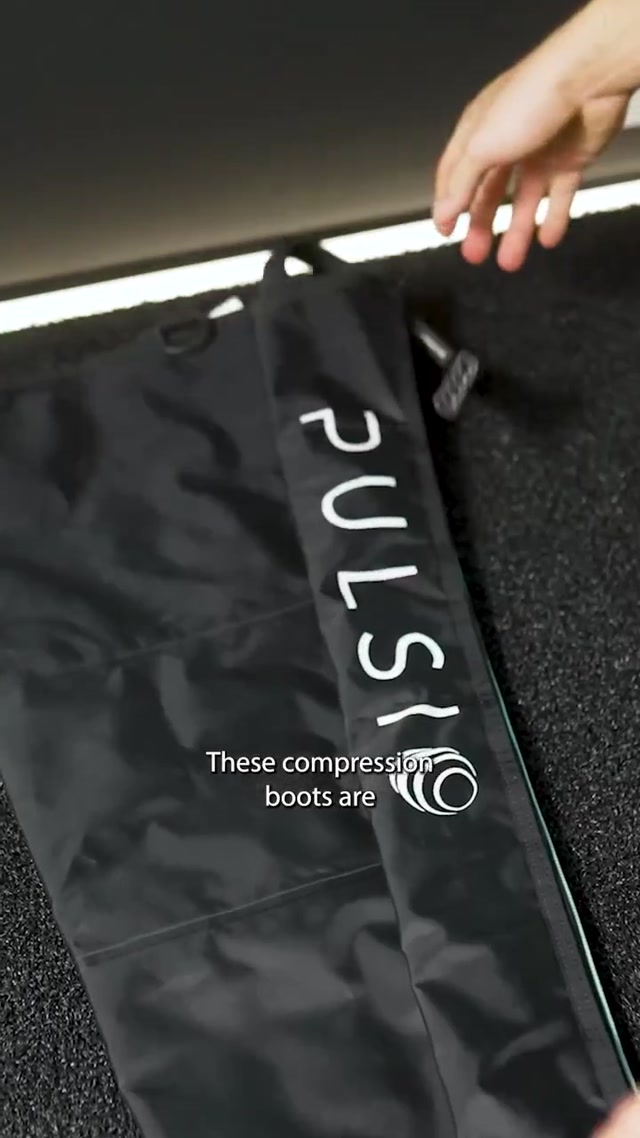
Beat 2 (0:00-0:03) — Contrast Setup: It sets up a contradiction between two outcomes: “These compression boots are half the price of market leaders” versus “But does this mean they're half as good?” This frames a decision tension (cheap vs quality) and signals that an answer is coming that will resolve the mismatch.
Beat 3 (0:03-0:08) — Object Intro: It introduces the product and immediately pre-qualifies it as proven: “These are Pulsio compression boots” followed by “they're a bestseller for a reason.” It then adds a credibility anchor by specifying the feature category: “British designed and engineered with advanced air pressure sensing technology…,” setting up the boots as the main subject for the rest of the video.
Beat 4 (0:08-0:17) — Feature Breakdown: It breaks down the key feature mechanism: “By applying pressure through all four chambers, these compression boots maximize circulation, reduce muscle soreness, and improve your recovery time.” Instead of listing benefits first, it ties each benefit back to the specific functional detail (four-chamber pressure), creating a one-to-one mapping between “all four chambers” and the outcomes.
Beat 5 (0:17-0:24) — Benchmark Comparison: It compares Pulsio compression boots directly to “market leaders,” claiming equivalence: “just as good as market leaders.” Then it adds a purchasing incentive by specifying the price and payment method: “only 75 pounds when you split payments with Clearpay.”
Beat 6 (0:24-0:29) — Fear → Relief: It turns the buyer’s risk anxiety into relief by leaning on a guarantee: “With Pulsio's 30-day money-back guarantee, you've got nothing to lose.” In this moment, it removes the perceived downside that might otherwise stop the viewer from acting.
Beat 7 (0:29-0:33) — Direct CTA: It delivers a direct instruction: “Click below.” This cues the viewer to take the next action immediately without weighing options, turning attention into motor intent.
Behavioral Psychology
This ad activates Loss Aversion as its primary behavioral mission. The viewer feels motivated to act now because buying later could mean missing out on major savings and better recovery value, while the money-back guarantee reduces the fear of being stuck with a bad purchase. Loss Aversion behavioral mission
Structural Fingerprint
Duration: 33 seconds. Beat count: 6. Total cuts: 20. Average beat duration: 5.5s. Average cut duration: 2.1s. Average visual energy: 6.7/10. Fitness ad formula reference
Frequently Asked Questions
Why does this Pulsio ad work? This Pulsio voiceover b-roll ad opens with a Contrast Setup hook that captures attention in the first 3 seconds. The psychological architecture activates Loss Aversion across 6 structural beats, each contributing a specific persuasion mechanism.
What hook does Pulsio use in this ad? Pulsio opens with a Contrast Setup hook. This leverages Contrast Setup by defining two opposing states (low price vs high performance) and then immediately questioning whether the worse-case link is true. The “But does this mean…” line activates Cognitive Dissonance/Belief Tension: viewers are prompted to reconcile the common assumption that lower cost implies proportionally lower quality. That uncertainty keeps them watching because they’re waiting for the resolution to the cheap-vs-goodness contrast.
What psychology does this Pulsio ad activate? This ad activates Loss Aversion as its primary behavioral mission. The viewer feels motivated to act now because buying later could mean missing out on major savings and better recovery value, while the money-back guarantee reduces the fear of being stuck with a bad purchase.
How long is this Pulsio ad and what's the structure? This ad runs 33 seconds with 6 structural beats and 20 cuts. Average cut duration is 2.1s. The pattern flow follows a full format structure common in voiceover b-roll ads.
What platform is this Pulsio ad running on? This voiceover b-roll ad is running on facebook. The fitness vertical typically sees strong performance on this platform for voiceover b-roll creative structures.
What makes this different from other fitness ads? Most fitness ads lean on generic format templates. Pulsio's version uses a distinct Contrast Setup hook structure paired with Loss Aversion — a combination that over-indexes in high-performing fitness creative.