Magic Mind's talking head b-roll ad is a 94-second health & supplements video creative decoded by Heista into 7 structural beats with 28 total cuts. Magic Mind's full brand intelligence
PATTERNMAP™
Loading PatternMap...
Ad Blueprint
Talking Head B-Roll
CategoryHealth Supplements
AngleSocial Proof Results
NarrativePain To Relief
IntentEmotional Arc Escalation
Hook Type
Direct Question Hook
10.5sDuration
5Shots
2.5sAvg Shot
Energy
Cut Points
0.9s3.4s6.8s9.5s
Psychology
Threat Reduction
Behavioral ApproachDemonstrate Method
Reassurance Statement
Uncertainty Resolution
Fear Cancellation
Soothing Tone
Every winning ad has a formula. Heista decodes it in seconds.
Magic Mind Ad Decoded — Direct Question Hook Analysis (94s)
Magic Mind's talking head b-roll ad is a 94-second health & supplements creative decoded by Heista into 7 structural beats. It opens with a Direct Question hook — This leverages Direct Question Hook to trigger self-referential processing—viewers mentally check “have I done this?”—which increases attention and reduces the urge to scroll. The “10 out of 10, do not recommend” adds a strong contrast that heightens Conflict/Contrast Setup in the viewer’s mind (it’s bad, yet it happened), while “here’s how we survived it” creates a resolution expectation that keeps them watching to see the method. The psychological mission is Threat Reduction: The viewer feels their stress and overwhelm get soothed by a clear, calming solution that makes the chaotic week feel manageable and survivable. The ad has 28 cuts at an average of 3.4s per cut, with an average beat duration of 13.5s.
Key Takeaways
- Opens with a Direct Question hook
- Activates Threat Reduction psychology
- Part of Magic Mind's full ad strategy
- 28 cuts, averaging 3.4s per cut
Overview
Direct Question Hook
This leverages Direct Question Hook to trigger self-referential processing—viewers mentally check “have I done this?”—which increases attention and reduces the urge to scroll. The “10 out of 10, do not recommend” adds a strong contrast that heightens Conflict/Contrast Setup in the viewer’s mind (it’s bad, yet it happened), while “here’s how we survived it” creates a resolution expectation that keeps them watching to see the method. Direct Question hook deep-dive
Beat-by-Beat Breakdown
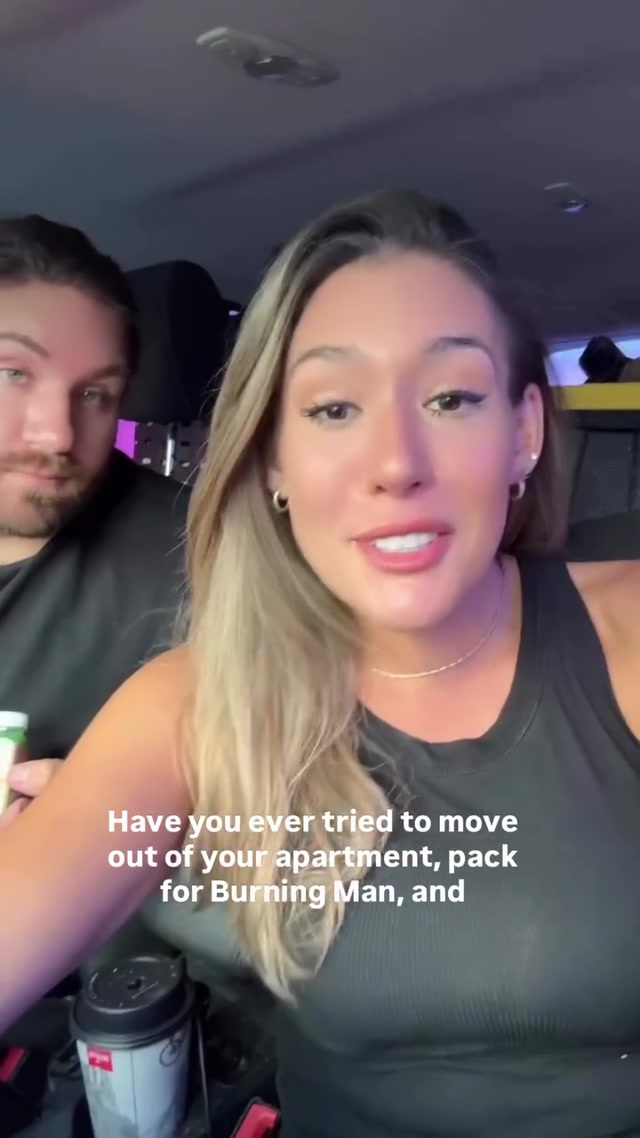
Beat 2 (0:00-0:10) — Direct Question Hook: It opens with a direct, answerable question: “Have you ever tried to move out of your apartment, pack for Burning Man, and drive across country all in the same week?” That question immediately frames the rest of the video as a personal, relatable experience, then escalates with the quantified verdict “10 out of 10, do not recommend,” before promising “here’s how we survived it.”
Beat 3 (0:10-0:26) — Scene Setter: It sets the physical and situational context: “We’re here at the Target in Lakewood, Colorado,” and frames the immediate situation as time-pressure and chaos: “trying to find our secret sauce to surviving the past few crazy weeks.” This places the viewer inside a real-world moment, making the upcoming search feel grounded and urgent rather than abstract.
Beat 4 (0:26-0:38) — Resource Constraint: It frames the offer as a “super secret 13-ingredient formula” that should make the viewer’s brain “actually work,” but anchors it to an extreme affordability claim: “only $3.99.” This turns the tension into a cost-based decision moment—if the viewer wants the benefit, the price is positioned as the limiting factor they can’t ignore.
Beat 5 (0:38-0:58) — Before/After Explanation: It contrasts the “before” state (without MagicMind) versus the “after” state (with MagicMind) using a direct cause-and-effect setup: “Without MagicMind, the lack of sleep and stress would have actually killed me,” then the improvement: “but these little shots, calm energy, sharp focus, and way less stress.” It also frames the contrast inside the extreme scenario (“trying to pack for Burning Man… trapped in a dust storm”) so the change feels like a survival difference, not a minor upgrade.
Beat 6 (0:58-1:12) — Industry Positioning: The speaker uses industry positioning by claiming the product is unavailable in major cities—“Vegas, L.A., Ibiza”—and then asserting, “you better believe that they don't have MagicMind there.” They follow with a purchase-intent validation: “I will be checking an entire suitcase of these.”
Beat 7 (1:12-1:28) — Overwhelm → Control: It reframes “chaos” as something you can toast and manage—“Cheers to calm chaos, baby.” The phrase pairs the threatening state (“chaos”) with a soothing modifier (“calm”), telling the viewer that the situation doesn’t have to feel out of control.
Beat 8 (1:28-1:34) — Punchline: It ends on a one-word dismissal: “Bye.” This functions as a hard stop that punctuates the video with finality rather than a next instruction.
Behavioral Psychology
This ad activates Threat Reduction as its primary behavioral mission. The viewer feels their stress and overwhelm get soothed by a clear, calming solution that makes the chaotic week feel manageable and survivable. Threat Reduction behavioral mission
Structural Fingerprint
Duration: 94 seconds. Beat count: 7. Total cuts: 28. Average beat duration: 13.5s. Average cut duration: 3.4s. Average visual energy: 4.6/10.
Frequently Asked Questions
Why does this Magic Mind ad work? This Magic Mind talking head b-roll ad opens with a Direct Question hook that captures attention in the first 3 seconds. The psychological architecture activates Threat Reduction across 7 structural beats, each contributing a specific persuasion mechanism.
What hook does Magic Mind use in this ad? Magic Mind opens with a Direct Question hook. This leverages Direct Question Hook to trigger self-referential processing—viewers mentally check “have I done this?”—which increases attention and reduces the urge to scroll. The “10 out of 10, do not recommend” adds a strong contrast that heightens Conflict/Contrast Setup in the viewer’s mind (it’s bad, yet it happened), while “here’s how we survived it” creates a resolution expectation that keeps them watching to see the method.
What psychology does this Magic Mind ad activate? This ad activates Threat Reduction as its primary behavioral mission. The viewer feels their stress and overwhelm get soothed by a clear, calming solution that makes the chaotic week feel manageable and survivable.
How long is this Magic Mind ad and what's the structure? This ad runs 94 seconds with 7 structural beats and 28 cuts. Average cut duration is 3.4s. The pattern flow follows a full format structure common in talking head b-roll ads.
What platform is this Magic Mind ad running on? This talking head b-roll ad is running on facebook. The health & supplements vertical typically sees strong performance on this platform for talking head b-roll creative structures.
What makes this different from other health & supplements ads? Most health & supplements ads lean on generic format templates. Magic Mind's version uses a distinct Direct Question hook structure paired with Threat Reduction — a combination that over-indexes in high-performing health & supplements creative.