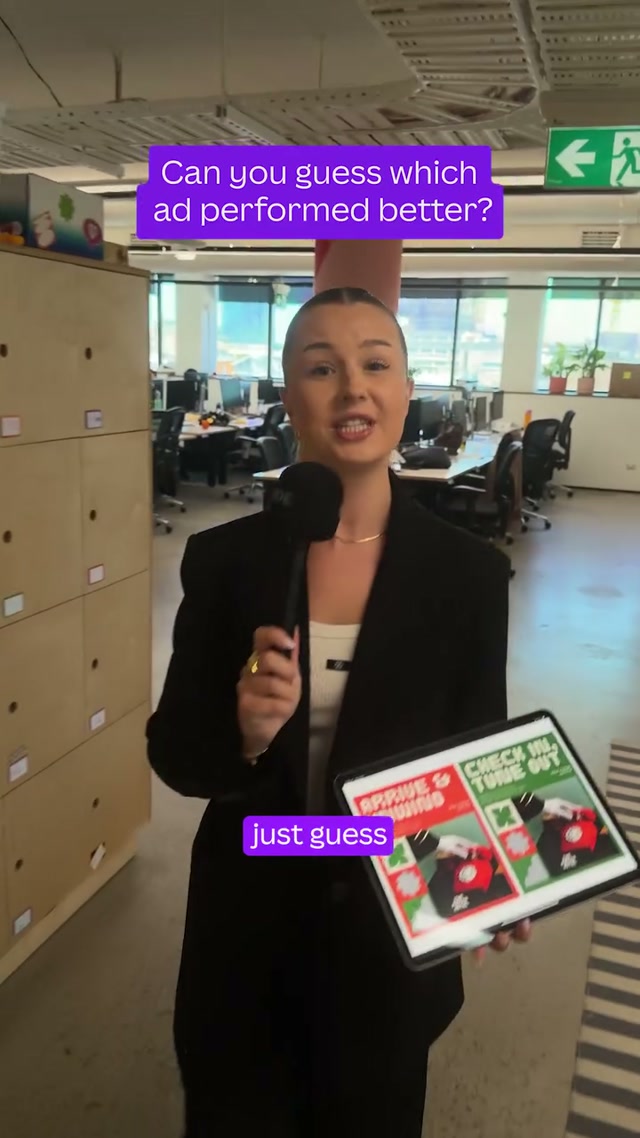
Luma AI's talking head screen ad is a 40-second saas & software video creative decoded by Heista into 7 structural beats with 17 total cuts. Luma AI's full brand intelligence
PATTERNMAP™
Loading PatternMap...
Ad Blueprint
Talking Head Screen
CategorySaas Software
AngleHow To Tutorial
NarrativeProduct First
IntentDiscovery Education Driver
Hook Type
Direct Question Hook
4.5sDuration
1Shots
5.0sAvg Shot
Energy
Psychology
Competence Restoration
Behavioral ApproachDemonstrate Method
Solution Assurance
Step Clarity
Knowledge Simplification
Every winning ad has a formula. Heista decodes it in seconds.
Luma AI Ad Decoded — Direct Question Hook Analysis (40s)
Luma AI's talking head screen ad is a 40-second saas & software creative decoded by Heista into 7 structural beats. It opens with a Direct Question hook — This leverages Direct Question Hook—because the question is clear and answerable, viewers mentally respond instantly (“yes/no”), which increases attention and continuation. It also uses Self-Relevance/Personalization: by asking about “you” and your current workflow, it creates immediate personal stakes, making it harder to scroll past. The psychological mission is Competence Restoration: The viewer feels empowered because the process is shown as simple and controllable, making the outcome seem achievable without extra complexity. The ad has 17 cuts at an average of 3.3s per cut, with an average beat duration of 5.7s.
Key Takeaways
- Opens with a Direct Question hook
- Activates Competence Restoration psychology
- Part of Luma AI's full ad strategy
- 17 cuts, averaging 3.3s per cut
Overview
Direct Question Hook
This leverages Direct Question Hook—because the question is clear and answerable, viewers mentally respond instantly (“yes/no”), which increases attention and continuation. It also uses Self-Relevance/Personalization: by asking about “you” and your current workflow, it creates immediate personal stakes, making it harder to scroll past. Direct Question hook deep-dive
Beat-by-Beat Breakdown
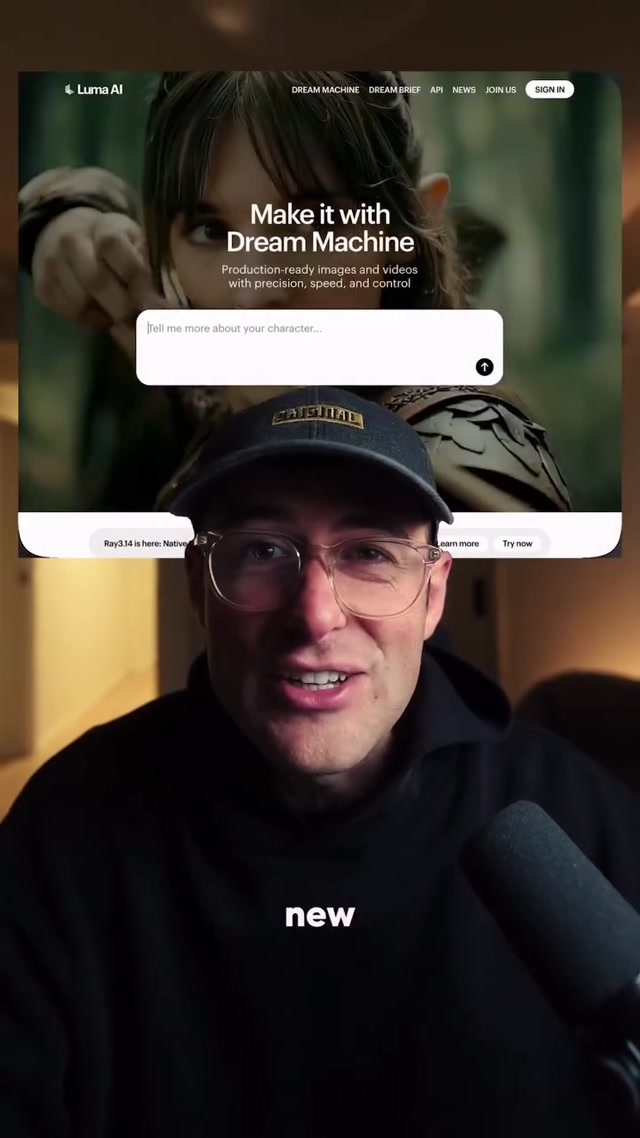
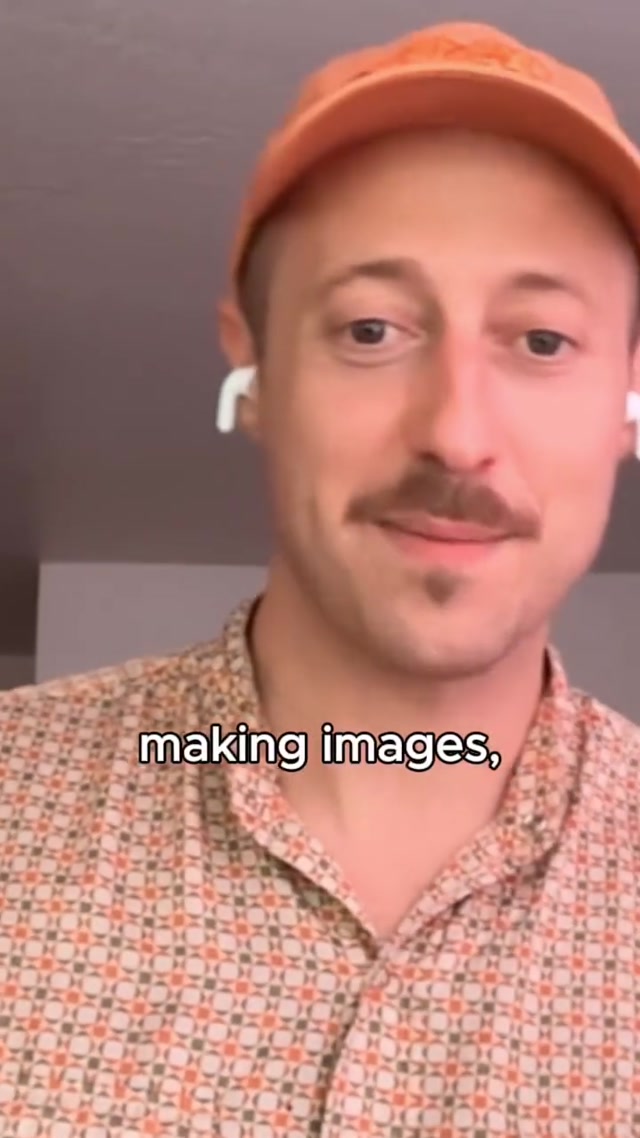
Beat 2 (0:00-0:04) — Direct Question Hook: It opens with a direct question: “Are you still making images, video, audio with different AI tools?” This immediately frames the viewer as the problem-holder and sets up an answer the video will provide, pulling them into self-check mode right away.
Beat 3 (0:04-0:10) — Quick Fix Instruction: The speaker issues a direct, urgent recommendation: “You gotta try Luma Agents. You gotta check this out.” This functions as a quick instruction to take immediate action rather than explaining features or benefits yet.
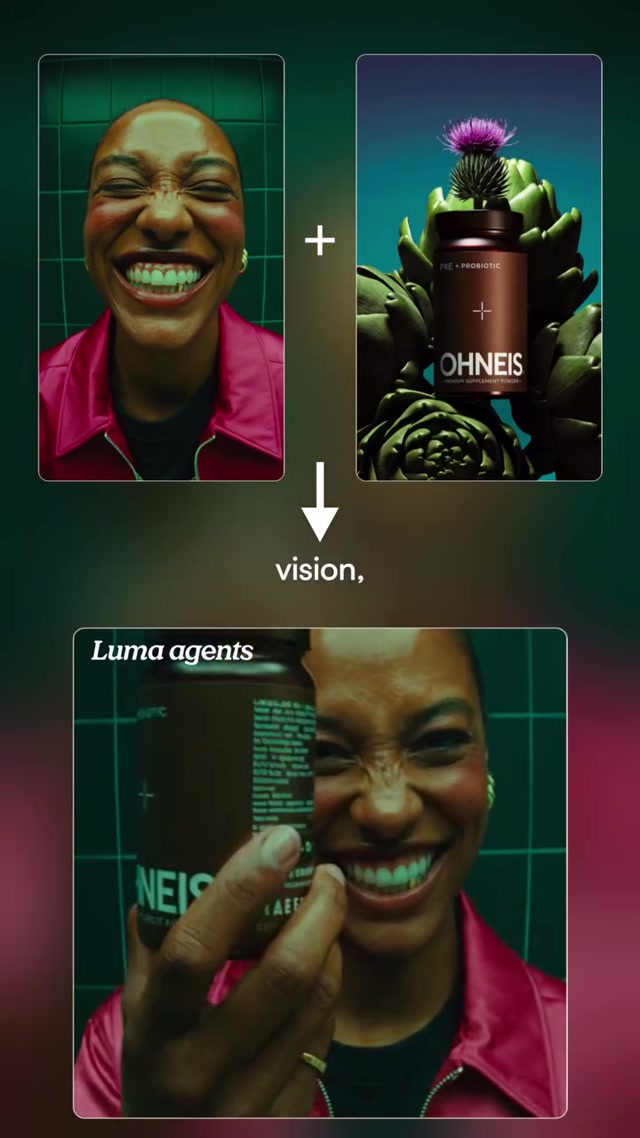
Beat 4 (0:10-0:18) — Process Setup: The speaker lays out the exact workflow: “all I had to do was add these two images… and I gave it some photography guidelines.” This turns the moment into a procedural recipe, telling the viewer what actions to take in what order.
Beat 5 (0:18-0:26) — Feature Cascade: The speaker delivers a rapid-fire feature cascade: “all of these image assets… four locations, four aspect ratios for two bikes with one prompt.” This stacks concrete outputs in quick succession, making the result feel like a high-yield payoff from a single input (“one prompt”).
Beat 6 (0:26-0:33) — Overwhelm → Control: The speaker reframes the process from “messy trial-and-error” into a controlled workflow: after picking favorites, they “turn it into video” and “test multiple models at the same time.” This shifts the viewer’s mental model from randomness to an intentional system for running parallel experiments.
Beat 7 (0:33-0:38) — Before/After Proof: The speaker validates the method by emphasizing a constraint-free result: “And all this was without any nodes.” This frames the outcome as achieved without a commonly assumed requirement, so the viewer mentally compares “with nodes” vs “without nodes” and registers the method as more capable than expected.
Beat 8 (0:38-0:39) — Lesson: It lands a simple “how it works” takeaway: “All I had to do was just talk to the agent, tell it what I wanted and I was able to get all of these assets.” The beat compresses the process into one effortless sequence (talk → tell → get assets), turning the story into a reusable rule.
Behavioral Psychology
This ad activates Competence Restoration as its primary behavioral mission. The viewer feels empowered because the process is shown as simple and controllable, making the outcome seem achievable without extra complexity. Competence Restoration behavioral mission
Structural Fingerprint
Duration: 40 seconds. Beat count: 7. Total cuts: 17. Average beat duration: 5.7s. Average cut duration: 3.3s. Average visual energy: 6/10.
Frequently Asked Questions
Why does this Luma AI ad work? This Luma AI talking head screen ad opens with a Direct Question hook that captures attention in the first 3 seconds. The psychological architecture activates Competence Restoration across 7 structural beats, each contributing a specific persuasion mechanism.
What hook does Luma AI use in this ad? Luma AI opens with a Direct Question hook. This leverages Direct Question Hook—because the question is clear and answerable, viewers mentally respond instantly (“yes/no”), which increases attention and continuation. It also uses Self-Relevance/Personalization: by asking about “you” and your current workflow, it creates immediate personal stakes, making it harder to scroll past.
What psychology does this Luma AI ad activate? This ad activates Competence Restoration as its primary behavioral mission. The viewer feels empowered because the process is shown as simple and controllable, making the outcome seem achievable without extra complexity.
How long is this Luma AI ad and what's the structure? This ad runs 40 seconds with 7 structural beats and 17 cuts. Average cut duration is 3.3s. The pattern flow follows a full format structure common in talking head screen ads.
What platform is this Luma AI ad running on? This talking head screen ad is running on facebook. The saas & software vertical typically sees strong performance on this platform for talking head screen creative structures.
What makes this different from other saas & software ads? Most saas & software ads lean on generic format templates. Luma AI's version uses a distinct Direct Question hook structure paired with Competence Restoration — a combination that over-indexes in high-performing saas & software creative.