Hostage Tape's talking head b-roll ad is a 66-second health & supplements video creative decoded by Heista into 7 structural beats with 14 total cuts. Hostage Tape's full brand intelligence
Facebook Ad
1:06
Hostage Tape
Heisted: Aug 4, 2026
PATTERNMAP™
Loading PatternMap...
Ad Blueprint
Talking Head B-Roll
CategoryHealth Supplements
AngleGuarantee Risk Reversal
NarrativePain To Relief
IntentMechanism Reveal
Hook Type
Disruptive Statement
8.5sDuration
4Shots
2.7sAvg Shot
Energy
Cut Points
0.5s2.9s5.1s
Psychology
Loss Aversion
Behavioral ApproachTeach Explain
Negative Future Projection
Risk Priming
Avoidance Trigger
Fear Of Loss
Every winning ad has a formula. Heista decodes it in seconds.
Hostage Tape Ad Decoded — Disruptive Statement Hook Analysis (66s)
Hostage Tape's talking head b-roll ad is a 66-second health & supplements creative decoded by Heista into 7 structural beats. It opens with a Disruptive Statement hook — This leverages Disruptive Statement: the phrase “mouth tape” is a surprising mismatch for what the viewer expects after “posted after a match,” so attention gets yanked from autopilot. It also uses Curiosity Spike mechanics via “Did you see it?”—the viewer is primed to check what they overlooked, and they keep watching to resolve the meaning of the weird claim. The psychological mission is Loss Aversion: The viewer feels urgency to stop their exhausted, under-recovered mornings by avoiding the specific mistake of mouth breathing, making the decision to try mouth tape feel necessary and protective. The ad has 14 cuts at an average of 4.5s per cut, with an average beat duration of 9.5s.
Key Takeaways
- Opens with a Disruptive Statement hook
- Activates Loss Aversion psychology
- Part of Hostage Tape's full ad strategy
- 14 cuts, averaging 4.5s per cut
Overview
Disruptive Statement Hook
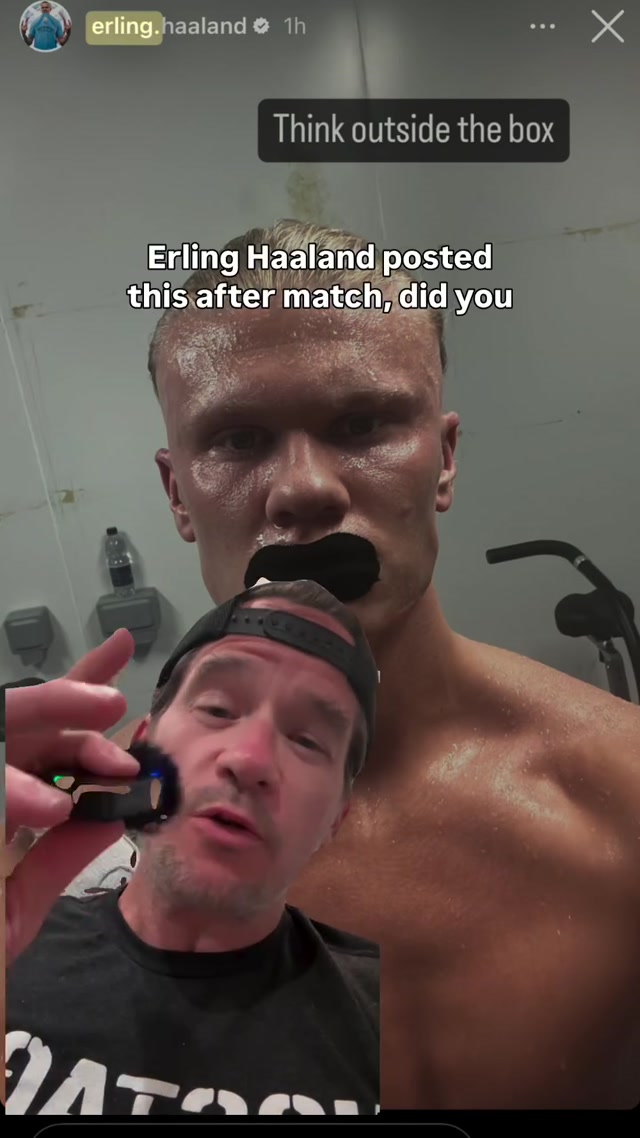
This leverages Disruptive Statement: the phrase “mouth tape” is a surprising mismatch for what the viewer expects after “posted after a match,” so attention gets yanked from autopilot. It also uses Curiosity Spike mechanics via “Did you see it?”—the viewer is primed to check what they overlooked, and they keep watching to resolve the meaning of the weird claim. Disruptive Statement hook deep-dive
Beat-by-Beat Breakdown
Beat 2 (0:00-0:08) — Disruptive Statement: It drops a jarring, non-obvious insult for a normal sports post: "Did you see it? Now, that is mouth tape." Then it frames the next idea as something you missed and need to understand.
Beat 3 (0:08-0:20) — Authority Setup: It asserts elite credibility and insider status: “This is the best striker on the planet” and then extends it—“Here’s what elite athletes have figured out.” In this moment, the viewer is primed to trust the coming advice because it’s anchored to top-tier performers rather than generic opinion.
Beat 4 (0:20-0:35) — Fear Projection: It projects a bad outcome from mouth-breathing during sleep: “your oxygen drops, your recovery tanks, and you wake up exhausted…”. By stacking physiological consequences and the next-morning result, it turns the viewer’s routine into an immediate threat to how they’ll feel after sleep.
Beat 5 (0:35-0:51) — Why It Works Breakdown: This explains why nasal breathing produces a different sleep outcome by laying out the mechanism as a chain of linked effects: “it produces nitric oxide. It increases oxygen delivery to your cells… keep your body in a deep sleep long enough to actually recover.” It then contrasts the result in plain terms: “the difference between waking up tired and actually waking up ready to go.”
Beat 6 (0:51-0:58) — Hidden Truth: It reveals a “hidden truth” mechanism: hostage tape is framed as “a small strip” you “put on your mouth… You put it on, you go to sleep, and you wake up a completely different person.” Then it adds legitimacy with scale: “Over 150,000 people are already doing this.”
Beat 7 (0:58-1:02) — Safety Assurance: The beat stacks validation claims around safety and suitability: “It’s skin-safe, beard-friendly,” immediately after “clinically studied” and “third-party tested.” It turns the product from “maybe works” into “safe to use,” in the viewer’s mind at the exact moment the method has already been asserted.
Beat 8 (1:02-1:06) — Try This Today: It tells viewers to take a low-effort immediate action: “Try it risk-free tonight.”
Behavioral Psychology
This ad activates Loss Aversion as its primary behavioral mission. The viewer feels urgency to stop their exhausted, under-recovered mornings by avoiding the specific mistake of mouth breathing, making the decision to try mouth tape feel necessary and protective. Loss Aversion behavioral mission
Structural Fingerprint
Duration: 66 seconds. Beat count: 7. Total cuts: 14. Average beat duration: 9.5s. Average cut duration: 4.5s. Average visual energy: 3.4/10.
Frequently Asked Questions
Why does this Hostage Tape ad work? This Hostage Tape talking head b-roll ad opens with a Disruptive Statement hook that captures attention in the first 3 seconds. The psychological architecture activates Loss Aversion across 7 structural beats, each contributing a specific persuasion mechanism.
What hook does Hostage Tape use in this ad? Hostage Tape opens with a Disruptive Statement hook. This leverages Disruptive Statement: the phrase “mouth tape” is a surprising mismatch for what the viewer expects after “posted after a match,” so attention gets yanked from autopilot. It also uses Curiosity Spike mechanics via “Did you see it?”—the viewer is primed to check what they overlooked, and they keep watching to resolve the meaning of the weird claim.
What psychology does this Hostage Tape ad activate? This ad activates Loss Aversion as its primary behavioral mission. The viewer feels urgency to stop their exhausted, under-recovered mornings by avoiding the specific mistake of mouth breathing, making the decision to try mouth tape feel necessary and protective.
How long is this Hostage Tape ad and what's the structure? This ad runs 66 seconds with 7 structural beats and 14 cuts. Average cut duration is 4.5s. The pattern flow follows a full format structure common in talking head b-roll ads.
What platform is this Hostage Tape ad running on? This talking head b-roll ad is running on facebook. The health & supplements vertical typically sees strong performance on this platform for talking head b-roll creative structures.
What makes this different from other health & supplements ads? Most health & supplements ads lean on generic format templates. Hostage Tape's version uses a distinct Disruptive Statement hook structure paired with Loss Aversion — a combination that over-indexes in high-performing health & supplements creative.