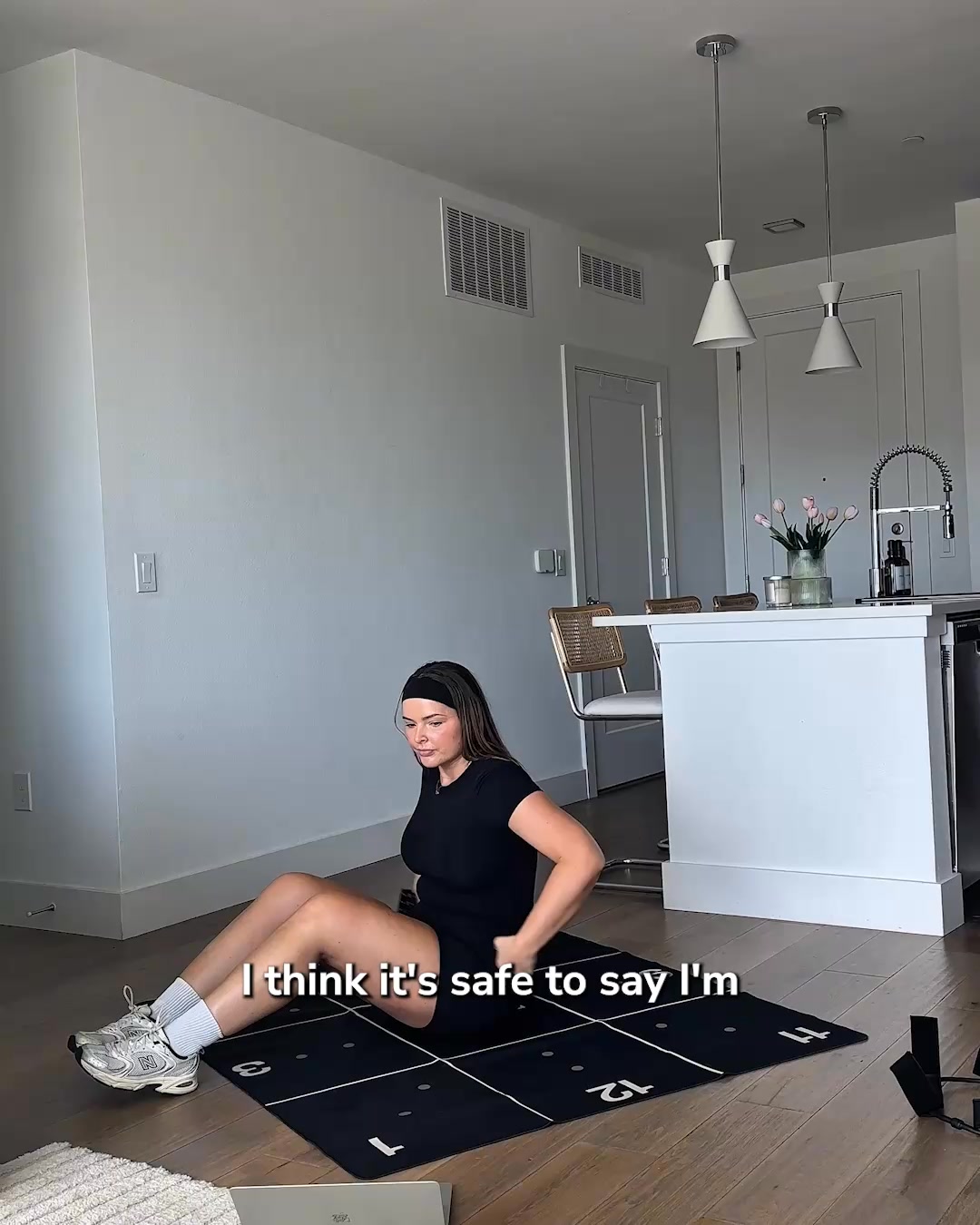
WalkFit Daily Walking Plan's slideshow statics ad is a 168-second fitness video creative decoded by Heista into 7 structural beats with 19 total cuts. WalkFit Daily Walking Plan's full brand intelligence · Fitness ad hooks
Facebook Ad
2:48
WalkFit Daily Walking Plan
Scaled: 1 DayHeisted: Aug 4, 2026
PATTERNMAP™
Loading PatternMap...
Ad Blueprint
Slideshow Statics
CategoryFitness
AngleHow To Tutorial
NarrativePain To Relief
IntentTransformation Arc Engine
Hook Type
Contradiction Hook
21.5sDuration
3Shots
8.7sAvg Shot
Energy
Cut Points
9.9s19.4s
Psychology
Loss Aversion
Behavioral ApproachPeer Recommend
Negative Future Projection
Risk Priming
Fear Of Loss
Avoidance Trigger
Scarcity Cue
Every winning ad has a formula. Heista decodes it in seconds.
WalkFit Daily Walking Plan Ad Decoded — Contradiction Hook Analysis (168s)
WalkFit Daily Walking Plan's slideshow statics ad is a 168-second fitness creative decoded by Heista into 7 structural beats. It opens with a Contradiction hook — This leverages Contradiction Bias by presenting two opposing interpretations in rapid succession: it looks like exercise but is “not as exercise, as maintenance.” That contradiction activates Cognitive Dissonance, making the viewer mentally resolve “what kind of training is that?” before they can fully accept the claim. The line “doesn’t look like a workout” plus “No sweat, no music, no mirrors” works via Expectation Violation: the viewer’s workout template is removed, increasing attention until the video explains the correct framework. The psychological mission is Loss Aversion: The viewer is pushed to act now by fearing they will keep missing out and feel worse if they rely on exhausting cardio, while the promise of a simple seven minute alternative feels like the safest way to avoid that trap. The ad has 19 cuts at an average of 15.1s per cut, with an average beat duration of 24s.
Key Takeaways
Overview
Contradiction Hook
This leverages Contradiction Bias by presenting two opposing interpretations in rapid succession: it looks like exercise but is “not as exercise, as maintenance.” That contradiction activates Cognitive Dissonance, making the viewer mentally resolve “what kind of training is that?” before they can fully accept the claim. The line “doesn’t look like a workout” plus “No sweat, no music, no mirrors” works via Expectation Violation: the viewer’s workout template is removed, increasing attention until the video explains the correct framework. Contradiction hook deep-dive
Beat-by-Beat Breakdown
Beat 2 (0:00-0:21) — Contradiction Hook: The beat uses a contradiction hook by insisting the move is “the exact position… grandmothers… hold… every single morning” while immediately reframing it as “Not as exercise, as maintenance.” It escalates the dissonance by stacking the expected workout features as absences: “Nobody in the West was taught this because it doesn’t look like a workout. No sweat, no music, no mirrors.”—prompting viewers to expect something else and then get told what it really is.
Beat 3 (0:21-0:44) — Repeatable Method: The speaker gives a repeatable method with a clear schedule: “Seven minutes a day, start this Monday, August 3rd… Starting lymphatic Tai Chi walking.” They also prime resistance with “Skeptical, but here we go,” turning the plan into a personal test rather than abstract advice.
Beat 4 (0:44-1:16) — Before/After Proof: It delivers a personal before/after timeline claim: “One week later… it’s just lighter today… no more morning stiffness… puffiness… has eased up… sleeping through the night,” while explicitly stating no other changes: “I haven’t changed anything else.” This forces the viewer to map one variable (the method) to multiple outcome shifts over the same period.
Beat 5 (1:16-1:53) — Stop → Start Shift: It tells viewers to stop forcing heavy workouts and switch to the right kind of movement. The key instruction is: “If you wake up feeling too stiff to move, stop forcing heavy workouts,” followed by the alternative: “Women over 50 do not need exhausting cardio. They just need the right gentle flow.”
Beat 6 (1:53-2:18) — Resource Constraint: The speaker reframes the problem as a practical limitation: “I can't get out here every single day… Between work, bad weather, and my knees acting up, it's just not realistic.” Then they highlight the emotional consequence of that limitation with “If you can't hit 10,000 steps outside, you feel guilty and just give up completely.”
Beat 7 (2:18-2:41) — Cost/Benefit Reframe: It reframes the offer as a high-benefit, low-effort trade: “seven-minute… routine… in your living room, no shoes, no equipment” plus “great low-impact… gentle on your joints instead of pounding them on the pavement.” It then counters the cost/feasibility objection with “No gym, no bad weather excuses” and promises the payoff: “helps you feel calmer and less stressed… and it gets easier to let the extra weight go.”
Beat 8 (2:41-2:47) — Direct CTA: It directly tells viewers what to do: “Tap the link below to join our summer challenge, and let’s transform your body right from home.” The sentence pairs an explicit action (tap the link) with an immediate outcome promise (transform your body).
Behavioral Psychology
This ad activates Loss Aversion as its primary behavioral mission. The viewer is pushed to act now by fearing they will keep missing out and feel worse if they rely on exhausting cardio, while the promise of a simple seven minute alternative feels like the safest way to avoid that trap. Loss Aversion behavioral mission
Structural Fingerprint
Duration: 168 seconds. Beat count: 7. Total cuts: 19. Average beat duration: 24s. Average cut duration: 15.1s. Average visual energy: 1.4/10. Fitness ad formula reference
Frequently Asked Questions
Why does this WalkFit Daily Walking Plan ad work? This WalkFit Daily Walking Plan slideshow statics ad opens with a Contradiction hook that captures attention in the first 3 seconds. The psychological architecture activates Loss Aversion across 7 structural beats, each contributing a specific persuasion mechanism.
What hook does WalkFit Daily Walking Plan use in this ad? WalkFit Daily Walking Plan opens with a Contradiction hook. This leverages Contradiction Bias by presenting two opposing interpretations in rapid succession: it looks like exercise but is “not as exercise, as maintenance.” That contradiction activates Cognitive Dissonance, making the viewer mentally resolve “what kind of training is that?” before they can fully accept the claim. The line “doesn’t look like a workout” plus “No sweat, no music, no mirrors” works via Expectation Violation: the viewer’s workout template is removed, increasing attention until the video explains the correct framework.
What psychology does this WalkFit Daily Walking Plan ad activate? This ad activates Loss Aversion as its primary behavioral mission. The viewer is pushed to act now by fearing they will keep missing out and feel worse if they rely on exhausting cardio, while the promise of a simple seven minute alternative feels like the safest way to avoid that trap.
How long is this WalkFit Daily Walking Plan ad and what's the structure? This ad runs 168 seconds with 7 structural beats and 19 cuts. Average cut duration is 15.1s. The pattern flow follows a full format structure common in slideshow statics ads.
What platform is this WalkFit Daily Walking Plan ad running on? This slideshow statics ad is running on facebook. The fitness vertical typically sees strong performance on this platform for slideshow statics creative structures.
What makes this different from other fitness ads? Most fitness ads lean on generic format templates. WalkFit Daily Walking Plan's version uses a distinct Contradiction hook structure paired with Loss Aversion — a combination that over-indexes in high-performing fitness creative.