Salt Lab's talking head product ad is a 94-second health & supplements video creative decoded by Heista into 7 structural beats with 4 total cuts. Salt Lab's full brand intelligence
PATTERNMAP™
Loading PatternMap...
Ad Blueprint
Talking Head Product
CategoryHealth Supplements
AngleSocial Proof Results
NarrativePain To Relief
IntentSocial Proof Accelerator
Hook Type
Story Start
10.5sDuration
1Shots
20.4sAvg Shot
Energy
Psychology
Emotional Spike
Behavioral ApproachVulnerability Signal
Sudden Shift
Shock Value
Rapid Tone Change
Provocative Statement
Every winning ad has a formula. Heista decodes it in seconds.
Salt Lab Ad Decoded — Story Start Hook Analysis (94s)
Salt Lab's talking head product ad is a 94-second health & supplements creative decoded by Heista into 7 structural beats. It opens with a Story Start hook — This leverages Narrative Transportation and Self-Disclosure Momentum: the concrete, time-anchored details (“just woke up,” “last night was really bad”) pull attention into the moment, while the repeated self-label (“horrible sleeper” twice) increases recognition and emotional salience, making it harder to look away before the cause/lesson is revealed. The psychological mission is Emotional Spike: The viewer feels an immediate jolt of surprise and relief as the creator’s intense “I’m shook” reaction turns into a vivid, confident claim of unexpectedly calm sleep after trying the product. The ad has 4 cuts at an average of 23.5s per cut, with an average beat duration of 13.4s.
Key Takeaways
- Opens with a Story Start hook
- Activates Emotional Spike psychology
- Part of Salt Lab's full ad strategy
- 4 cuts, averaging 23.5s per cut
Overview
Story Start Hook
This leverages Narrative Transportation and Self-Disclosure Momentum: the concrete, time-anchored details (“just woke up,” “last night was really bad”) pull attention into the moment, while the repeated self-label (“horrible sleeper” twice) increases recognition and emotional salience, making it harder to look away before the cause/lesson is revealed. Story Start hook deep-dive
Beat-by-Beat Breakdown
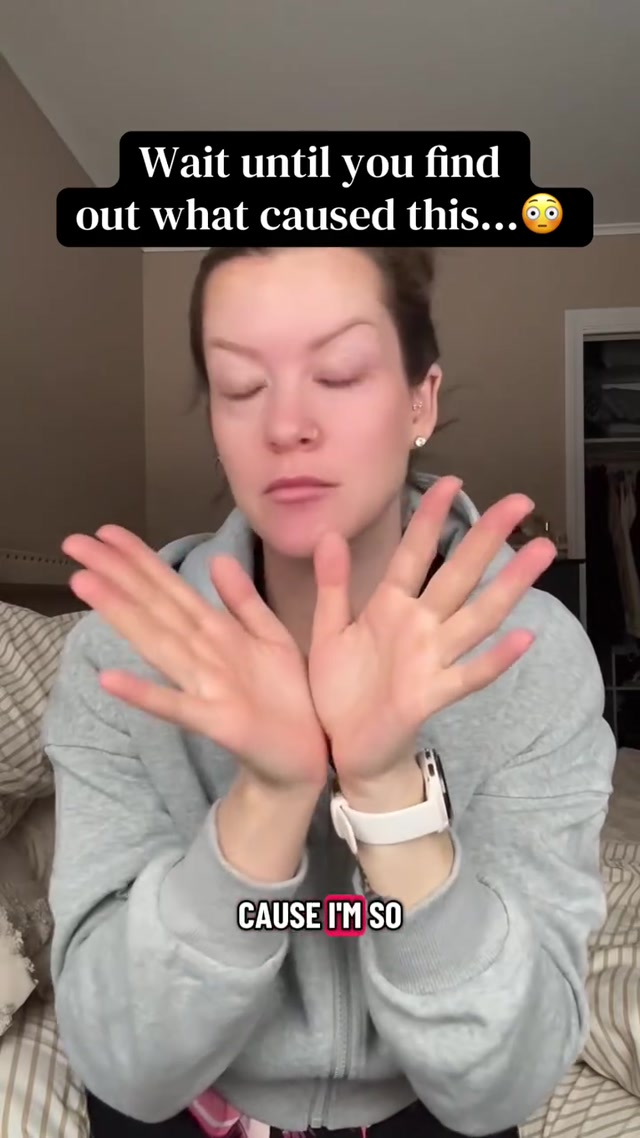
Beat 2 (0:00-0:10) — Story Start: It starts a quick personal scene: “I am sharing this because I'm so shook by it. I clearly just woke up.” Then it escalates into a self-diagnosis moment with repetition and immediacy: “I'm a horrible sleeper. I'm a horrible sleeper. Last night was really bad.” This makes the viewer mentally enter the speaker’s “right now” experience and stay to see what the “shook” wake-up leads to.
Beat 3 (0:10-0:24) — Object Intro: The speaker introduces the watch as the key tool for the experiment: “And I wear my watch to sleep to get my quality sleep every night.” They then attach a specific prior condition and outcome to it: “The night prior I slept four and a half hours… Four and a half hours, good quality sleep and calm.”
Beat 4 (0:24-0:33) — Inefficiency Pain: It frames the viewer’s sleep problem as something they can “fix” with a simple routine: “The only thing I did… I had gotten this magnesium spray… So you’re supposed to spray like two or three sprays on the bottoms of your feet… and you’re supposed to sleep better.” This turns the tension into a friction story—rather than changing many things, the speaker implies the whole outcome hinges on one easy step.
Beat 5 (0:33-0:55) — Before/After Explanation: The speaker contrasts the product’s claim with their own experience: “it says it can take a couple times or a couple of weeks to see like changes” versus “That's the first time I've ever used it last night… Did like I think three sprays on my feet… because I just could not sleep.” They also compare their prior approach (“I take like regular magnesium… those have been starting to not do the job for me”) to the new method (spraying the “better you rest and recharge” spray).
Beat 6 (0:55-1:10) — Track Record Proof: The speaker uses a personal outcome claim—“I can't believe how well I slept”—as validation, then immediately qualifies it for the target audience: “if you are also someone that struggles with sleep… If this helps my non sleepers sleep, great.”
Beat 7 (1:10-1:24) — The Easy Way: It offers a shortcut by implying a simple next step: “I’ll put it in the shopping.” This reframes the process from “figure it out” to “just do this one action,” reducing mental effort in the moment.
Beat 8 (1:24-1:34) — Redirect: It sends the viewer to the shopping page: “I'll put it in the shopping.” This immediately converts the message into a concrete next location to act on, reducing decision friction at the end of the video.
Behavioral Psychology
This ad activates Emotional Spike as its primary behavioral mission. The viewer feels an immediate jolt of surprise and relief as the creator’s intense “I’m shook” reaction turns into a vivid, confident claim of unexpectedly calm sleep after trying the product. Emotional Spike behavioral mission
Structural Fingerprint
Duration: 94 seconds. Beat count: 7. Total cuts: 4. Average beat duration: 13.4s. Average cut duration: 23.5s. Average visual energy: 1.1/10.
Frequently Asked Questions
Why does this Salt Lab ad work? This Salt Lab talking head product ad opens with a Story Start hook that captures attention in the first 3 seconds. The psychological architecture activates Emotional Spike across 7 structural beats, each contributing a specific persuasion mechanism.
What hook does Salt Lab use in this ad? Salt Lab opens with a Story Start hook. This leverages Narrative Transportation and Self-Disclosure Momentum: the concrete, time-anchored details (“just woke up,” “last night was really bad”) pull attention into the moment, while the repeated self-label (“horrible sleeper” twice) increases recognition and emotional salience, making it harder to look away before the cause/lesson is revealed.
What psychology does this Salt Lab ad activate? This ad activates Emotional Spike as its primary behavioral mission. The viewer feels an immediate jolt of surprise and relief as the creator’s intense “I’m shook” reaction turns into a vivid, confident claim of unexpectedly calm sleep after trying the product.
How long is this Salt Lab ad and what's the structure? This ad runs 94 seconds with 7 structural beats and 4 cuts. Average cut duration is 23.5s. The pattern flow follows a full format structure common in talking head product ads.
What platform is this Salt Lab ad running on? This talking head product ad is running on facebook. The health & supplements vertical typically sees strong performance on this platform for talking head product creative structures.
What makes this different from other health & supplements ads? Most health & supplements ads lean on generic format templates. Salt Lab's version uses a distinct Story Start hook structure paired with Emotional Spike — a combination that over-indexes in high-performing health & supplements creative.