LAB Golf's voiceover b-roll ad is a 55-second sports outdoors video creative decoded by Heista into 7 structural beats with 14 total cuts. LAB Golf's full brand intelligence
PATTERNMAP™
Loading PatternMap...
Ad Blueprint
Voiceover B-Roll
CategorySports Outdoors
AngleProblem Solution
NarrativeProduct First
IntentMicro Story Payoff Engine
Hook Type
Past-self Open
7.5sDuration
4Shots
2.5sAvg Shot
Energy
Cut Points
0.1s3.0s7.0s
Psychology
Competence Restoration
Behavioral ApproachPeer Recommend
Solution Assurance
Knowledge Simplification
Step Clarity
Competence Reframing
Every winning ad has a formula. Heista decodes it in seconds.
LAB Golf Ad Decoded — Past-Self Open Hook Analysis (55s)
LAB Golf's voiceover b-roll ad is a 55-second sports outdoors creative decoded by Heista into 7 structural beats. It opens with a Past-Self Open hook — This leverages Narrative Transportation and Self-Relevance/Identification: hearing a specific prior failure (“missed two foot putts”) creates an easy mental match for viewers who struggle. It also activates Authority Through Lived Experience, because the speaker isn’t citing theory first—he’s establishing credibility via personal records of the exact problem. The psychological mission is Competence Restoration: The viewer feels encouraged and capable because a clear equipment-based fix is presented as something that makes improvement feel attainable even for non-professionals. The ad has 14 cuts at an average of 4s per cut, with an average beat duration of 7.9s.
Key Takeaways
- Opens with a Past-Self Open hook
- Activates Competence Restoration psychology
- Part of LAB Golf's full ad strategy
- 14 cuts, averaging 4s per cut
Overview
Past-Self Open Hook
This leverages Narrative Transportation and Self-Relevance/Identification: hearing a specific prior failure (“missed two foot putts”) creates an easy mental match for viewers who struggle. It also activates Authority Through Lived Experience, because the speaker isn’t citing theory first—he’s establishing credibility via personal records of the exact problem. Past-Self Open hook deep-dive
Beat-by-Beat Breakdown
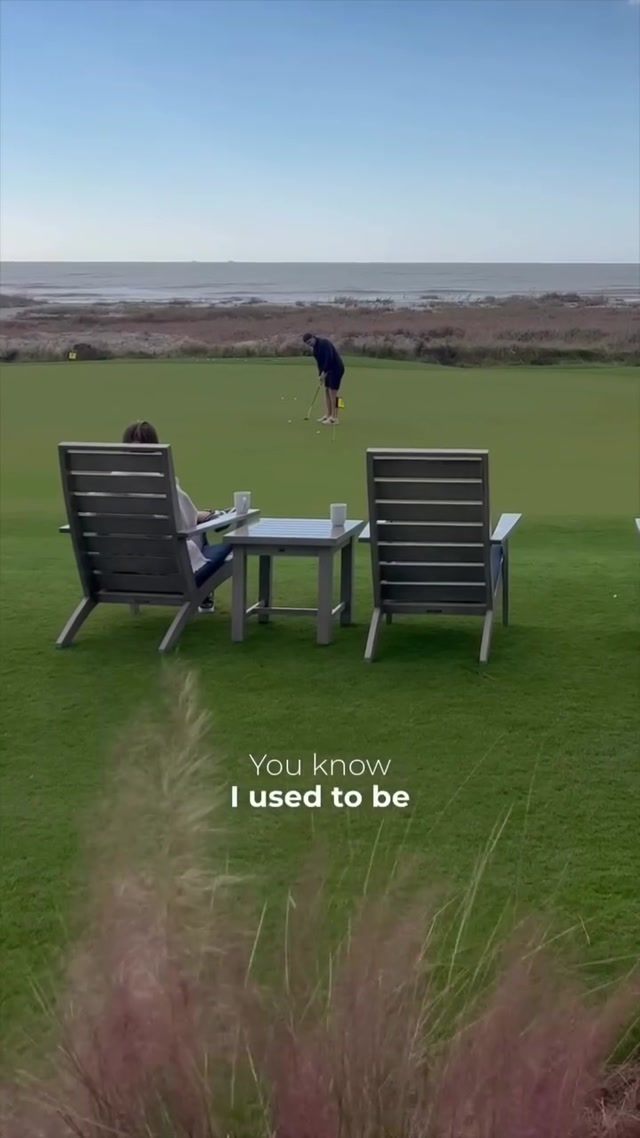
Beat 2 (0:00-0:07) — Past-Self Open: The beat uses a Past-Self Open: the speaker says, “I used to be really bad at putting—missed two foot putts on a regular basis bad.” This immediately frames the rest of the video as a personal before-to-after transformation, with the viewer mentally filing the speaker as “I’ve been there.”
Beat 3 (0:07-0:19) — Authority Setup: It borrows credibility by referencing a famous golfer: “Then I saw Adam Scott putt…” and ties that to the viewer’s problem: “…and I asked you guys how I fix my putting.” This instantly frames the speaker’s next explanation as informed by what they noticed from an authority in the sport.
Beat 4 (0:19-0:27) — Common Mistake: The beat points to a widespread decision pattern: “The consensus was get a lap.” It frames the viewer’s likely behaviour (or the group’s default choice) as a single-track “consensus” move that people commonly make, which creates recognition tension for anyone who’s relied on that standard play.
Beat 5 (0:27-0:38) — Story Continuation: It continues a personal decision story: “So I started the journey” → “trying everything they had in the line” → “ultimately ended up with a Mezz Max counterbalance.” The viewer is carried through the sequence of attempts and the final outcome to stay mentally tracking the resolution (what changed, and what it led to).
Beat 6 (0:38-0:48) — The Easy Way: It reframes the “tech is cheating” assumption into a simpler, lower-pressure reality: “the answer is simple” and “the lab technology lets you still miss-hit the ball and be a normal person.” In this moment, it reduces the intimidation of advanced tech by saying it doesn’t guarantee perfection—your skill still matters.
Beat 7 (0:48-0:52) — Track Record Proof: The speaker uses track-record proof by claiming the method has repeatedly worked for them: “it’s helped me” and “get the ball started on your intended line more often than not.” They also extends that prior success outward: “I guarantee it could probably help you too.”
Beat 8 (0:52-0:55) — Redirect: It issues a direct recommendation to a specific resource: “I would definitely recommend checking out the lab.” Then it reinforces credibility with social proof and a named validation: “He’s done it— that’s a W for Blair.”
Behavioral Psychology
This ad activates Competence Restoration as its primary behavioral mission. The viewer feels encouraged and capable because a clear equipment-based fix is presented as something that makes improvement feel attainable even for non-professionals. Competence Restoration behavioral mission
Structural Fingerprint
Duration: 55 seconds. Beat count: 7. Total cuts: 14. Average beat duration: 7.9s. Average cut duration: 4s. Average visual energy: 4.6/10.
Frequently Asked Questions
Why does this LAB Golf ad work? This LAB Golf voiceover b-roll ad opens with a Past-Self Open hook that captures attention in the first 3 seconds. The psychological architecture activates Competence Restoration across 7 structural beats, each contributing a specific persuasion mechanism.
What hook does LAB Golf use in this ad? LAB Golf opens with a Past-Self Open hook. This leverages Narrative Transportation and Self-Relevance/Identification: hearing a specific prior failure (“missed two foot putts”) creates an easy mental match for viewers who struggle. It also activates Authority Through Lived Experience, because the speaker isn’t citing theory first—he’s establishing credibility via personal records of the exact problem.
What psychology does this LAB Golf ad activate? This ad activates Competence Restoration as its primary behavioral mission. The viewer feels encouraged and capable because a clear equipment-based fix is presented as something that makes improvement feel attainable even for non-professionals.
How long is this LAB Golf ad and what's the structure? This ad runs 55 seconds with 7 structural beats and 14 cuts. Average cut duration is 4s. The pattern flow follows a full format structure common in voiceover b-roll ads.
What platform is this LAB Golf ad running on? This voiceover b-roll ad is running on facebook. The sports outdoors vertical typically sees strong performance on this platform for voiceover b-roll creative structures.
What makes this different from other sports outdoors ads? Most sports outdoors ads lean on generic format templates. LAB Golf's version uses a distinct Past-Self Open hook structure paired with Competence Restoration — a combination that over-indexes in high-performing sports outdoors creative.