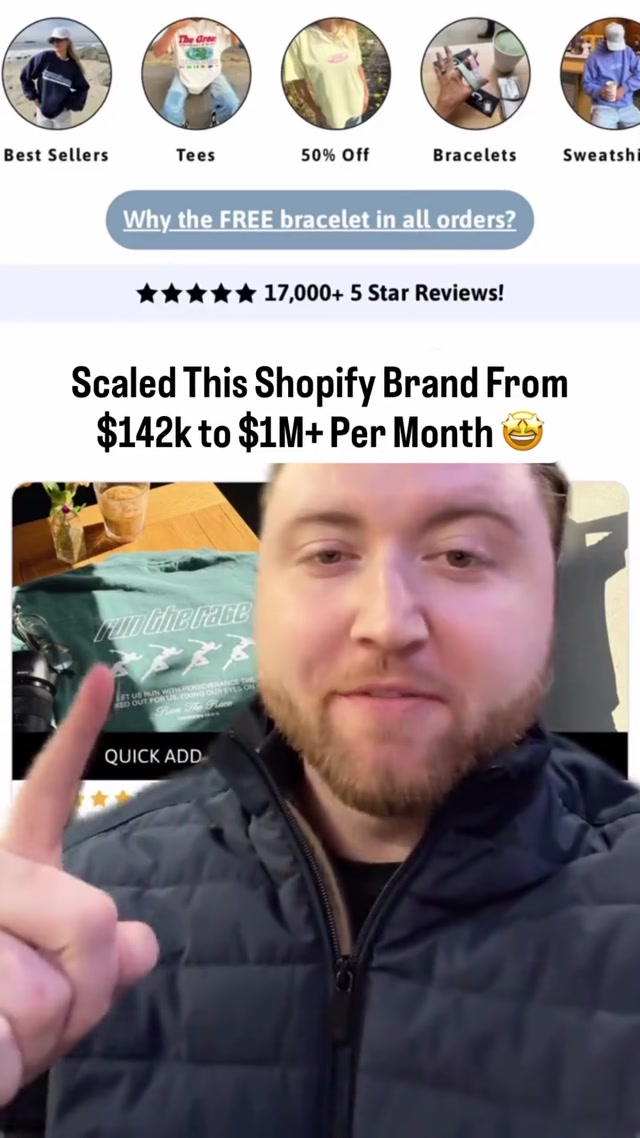
Chase Chappell's talking head screen ad is a 72-second saas & software video creative decoded by Heista into 7 structural beats with 12 total cuts. Chase Chappell's full brand intelligence
PATTERNMAP™
Loading PatternMap...
Ad Blueprint
Talking Head Screen
CategorySaas Software
AngleExpert Authority
NarrativeResults Proof
IntentCTA Optimized Conversion
Hook Type
Data Point Start
6.5sDuration
2Shots
5.0sAvg Shot
Energy
Cut Points
5.1s
Psychology
Competence Restoration
Behavioral ApproachDemonstrate Method
Step Clarity
Solution Assurance
Competence Reframing
Knowledge Simplification
Every winning ad has a formula. Heista decodes it in seconds.
Chase Chappell Ad Decoded — Data Point Start Hook Analysis (72s)
Chase Chappell's talking head screen ad is a 72-second saas & software creative decoded by Heista into 7 structural beats. It opens with a Data Point Start hook — This leverages Data Point Start—hard numbers create instant credibility and reduce skepticism, so viewers keep watching to understand the mechanism behind the jump. The “Here’s how we did it” line activates a Process Teaser effect, turning the curiosity about the result into a commitment to follow the steps. The psychological mission is Competence Restoration: The viewer feels their growth problem is solvable because the plan pinpoints the bottleneck and shows a clear, repeatable path to scaling from stuck revenue to a million-dollar month. The ad has 12 cuts at an average of 19.7s per cut, with an average beat duration of 10.3s.
Key Takeaways
- Opens with a Data Point Start hook
- Activates Competence Restoration psychology
- Part of Chase Chappell's full ad strategy
- 12 cuts, averaging 19.7s per cut
Overview
Data Point Start Hook
This leverages Data Point Start—hard numbers create instant credibility and reduce skepticism, so viewers keep watching to understand the mechanism behind the jump. The “Here’s how we did it” line activates a Process Teaser effect, turning the curiosity about the result into a commitment to follow the steps. Data Point Start hook deep-dive
Beat-by-Beat Breakdown
Beat 2 (0:00-0:06) — Data Point Start: It opens with quantified proof: “$142,000 per month to $1,000,000 per month on Shopify.” Then it immediately frames the next segment as a method: “Here’s how we did it.”
Beat 3 (0:06-0:18) — Scene Setter: It sets the pre-intervention baseline by pointing to what was happening “before we got started here” and specifying the pattern: “they were fluctuating around these numbers.” Then it frames the turning point: “before we got started here and results took off.”
Beat 4 (0:18-0:33) — Inefficiency Pain: It pinpoints a specific inefficiency: “They were converting too many of the same new customers” and therefore “needed to acquire net new people, which would allow them to be able to scale.” This reframes the problem as wasted growth effort—spending energy on the wrong customer mix instead of building scalable net-new acquisition.
Beat 5 (0:33-0:48) — Reasoning Chain: It lays out a causal reasoning chain for why growth is stuck: “by inversing the returning customer rate and focusing on only new customers with meta ads, we'd be able to scale.” Then it explains the diagnosis: “Quite literally why you see high returning customer rate and sales being stuck because you're just not getting new people.”
Beat 6 (0:48-0:58) — Cost/Benefit Shift: It reframes the payoff of the strategy from “more marketing” into a compounding business outcome: “acquire a ton of new customers and get way more sessions… continuously stack revenue… hit that million dollar month.” This shifts the viewer’s mental ledger from effort/expense to measurable upside and momentum.
Beat 7 (0:58-1:07) — Feature Cascade: It stacks a rapid-fire sequence of growth levers: “ramping up the different ad creative formats… on a weekly cadence… bring down how to optimize and scale… as well as… optimize their website… and made it easier… to opt in more people with their email list.” This creates a dense “all-at-once” picture of what they changed, so the viewer mentally inventories multiple improvements in one pass.
Beat 8 (1:07-1:11) — Redirect: It directly tells viewers to take the next step by clicking the link to book a one-on-one call: “click the link below to book a one-on-one call.” This converts the promise of “exact strategies” into an immediate external action.
Behavioral Psychology
This ad activates Competence Restoration as its primary behavioral mission. The viewer feels their growth problem is solvable because the plan pinpoints the bottleneck and shows a clear, repeatable path to scaling from stuck revenue to a million-dollar month. Competence Restoration behavioral mission
Structural Fingerprint
Duration: 72 seconds. Beat count: 7. Total cuts: 12. Average beat duration: 10.3s. Average cut duration: 19.7s. Average visual energy: 2.4/10.
Frequently Asked Questions
Why does this Chase Chappell ad work? This Chase Chappell talking head screen ad opens with a Data Point Start hook that captures attention in the first 3 seconds. The psychological architecture activates Competence Restoration across 7 structural beats, each contributing a specific persuasion mechanism.
What hook does Chase Chappell use in this ad? Chase Chappell opens with a Data Point Start hook. This leverages Data Point Start—hard numbers create instant credibility and reduce skepticism, so viewers keep watching to understand the mechanism behind the jump. The “Here’s how we did it” line activates a Process Teaser effect, turning the curiosity about the result into a commitment to follow the steps.
What psychology does this Chase Chappell ad activate? This ad activates Competence Restoration as its primary behavioral mission. The viewer feels their growth problem is solvable because the plan pinpoints the bottleneck and shows a clear, repeatable path to scaling from stuck revenue to a million-dollar month.
How long is this Chase Chappell ad and what's the structure? This ad runs 72 seconds with 7 structural beats and 12 cuts. Average cut duration is 19.7s. The pattern flow follows a full format structure common in talking head screen ads.
What platform is this Chase Chappell ad running on? This talking head screen ad is running on facebook. The saas & software vertical typically sees strong performance on this platform for talking head screen creative structures.
What makes this different from other saas & software ads? Most saas & software ads lean on generic format templates. Chase Chappell's version uses a distinct Data Point Start hook structure paired with Competence Restoration — a combination that over-indexes in high-performing saas & software creative.