Grammarly's talking head product ad is a 43-second saas & software video creative decoded by Heista into 7 structural beats with 0 total cuts. Grammarly's full brand intelligence
PATTERNMAP™
Loading PatternMap...
Ad Blueprint
Talking Head Product
CategorySaas Software
AngleHow To Tutorial
NarrativeProduct First
IntentDiscovery Education Driver
Hook Type
Contradiction Hook
6.5sDuration
0Shots
—sAvg Shot
Psychology
Competence Restoration
Behavioral ApproachSell Product Direct
Step Clarity
Solution Assurance
Competence Reframing
Knowledge Simplification
Every winning ad has a formula. Heista decodes it in seconds.
Grammarly Ad Decoded — Contradiction Hook Analysis (43s)
Grammarly's talking head product ad is a 43-second saas & software creative decoded by Heista into 7 structural beats. It opens with a Contradiction hook — This leverages Contradiction Hook by directly challenging the viewer’s default belief, which creates cognitive dissonance and forces attention to resolve the mismatch. It also uses Expectation Violation: once the brain flags “not that,” it keeps watching to find the correct explanation behind the contradiction. The psychological mission is Competence Restoration: The viewer feels capable and relieved because a simple one button action reliably turns messy drafts into polished professional messages across apps. The ad has 0 cuts at an average of 0s per cut, with an average beat duration of 6.1s.
Key Takeaways
Overview
Contradiction Hook
This leverages Contradiction Hook by directly challenging the viewer’s default belief, which creates cognitive dissonance and forces attention to resolve the mismatch. It also uses Expectation Violation: once the brain flags “not that,” it keeps watching to find the correct explanation behind the contradiction. Contradiction hook deep-dive
Beat-by-Beat Breakdown
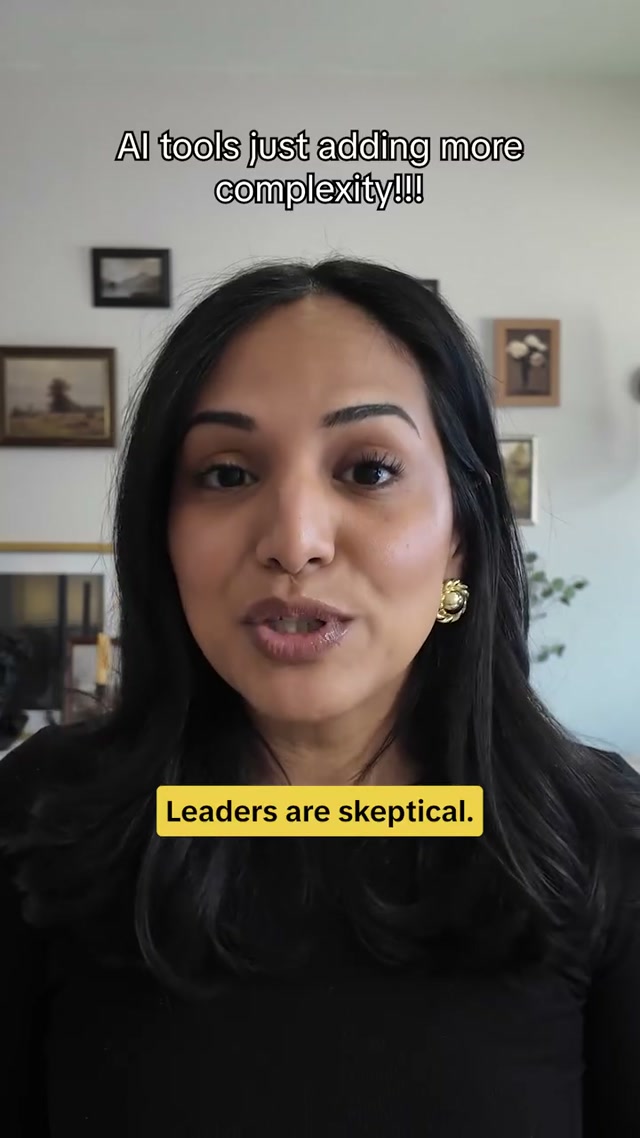
Beat 2 (0:00-0:06) — Contradiction Hook: It opens by contradicting a common assumption: “Your secret hack at work isn't more coffee.” This flips the viewer’s expectation that the “hack” is a simple caffeine fix, creating immediate tension about what the real hack will be.
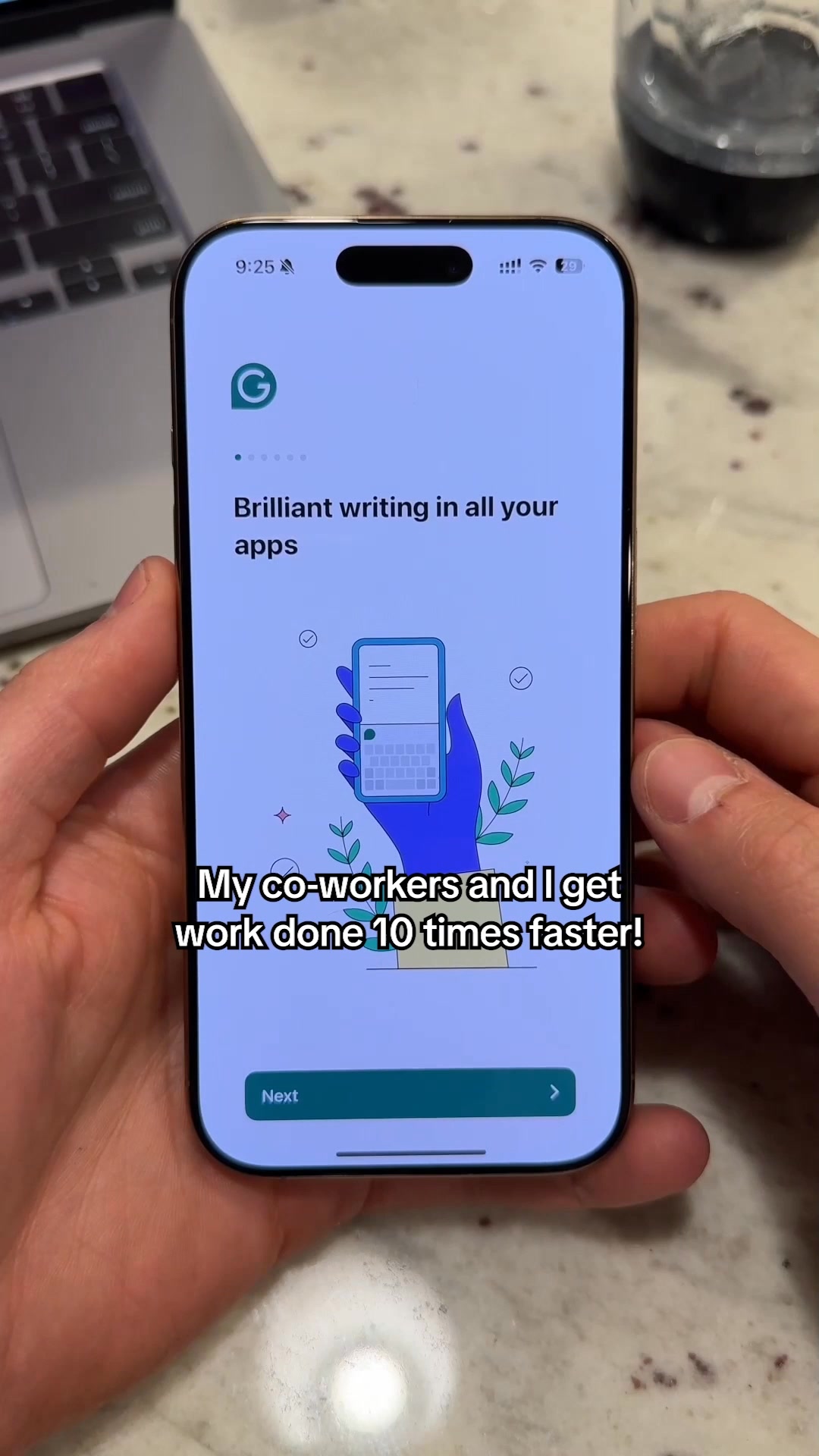
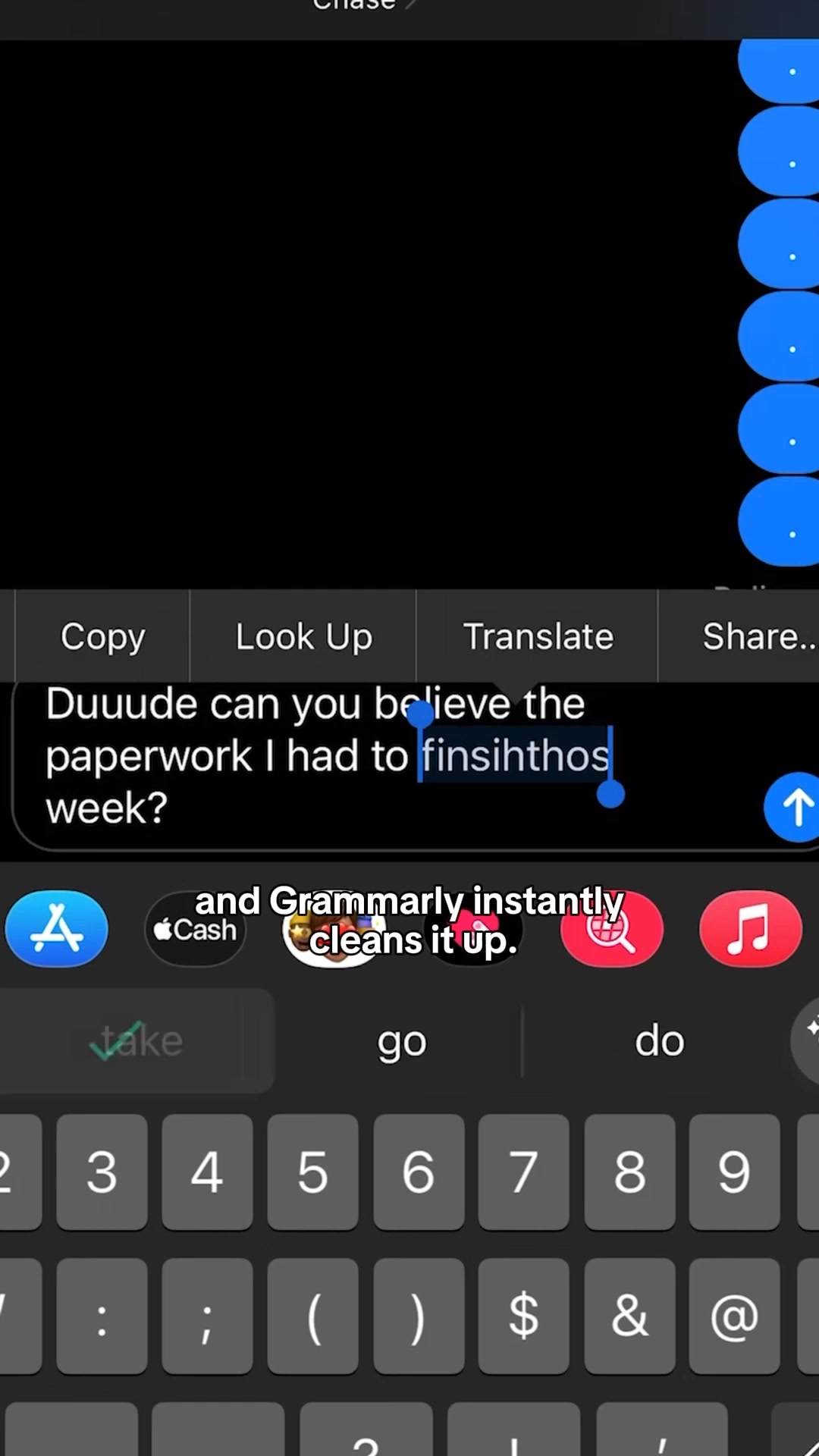
Beat 3 (0:06-0:14) — Object Intro: It introduces the specific tool being demonstrated: “It’s this AI keyboard.” Then it immediately frames how it works in the viewer’s everyday typing flow: “You just type like you normally do—typos, half thoughts, all of it—and Grammarly instantly cleans it up.”
Beat 4 (0:14-0:20) — Self-Doubt Trigger: It directly calls out the viewer’s uncertainty: “if you’re worried about AI written content…”. This frames the problem as a personal doubt about whether AI text will sound credible, so the viewer feels their concern is being understood and is now being addressed.
Beat 5 (0:20-0:31) — Before/After Explanation: It contrasts the viewer’s current state (“messy”) with the improved result after using the method (“polished in seconds”) and then reinforces the transformation with a time-and-effort promise (“Tap one button… in seconds”). It also extends the before/after payoff across contexts by adding “It works across all your apps without you ever copying and pasting.”
Beat 6 (0:31-0:36) — Safety Assurance: It reassures the viewer that Grammarly’s AI detector actively prevents a specific failure mode: “makes sure your writing stays original and authentic.” This functions as a validation layer that the tool won’t let your content cross into “AI-sounding” territory.
Beat 7 (0:36-0:40) — Fear → Relief: It reframes the work-writing experience from stress to ease by pairing a relief promise with a low-friction offer: “it’s free—making every message at work easier and way less stressful.” The beat turns the emotional cost of communication into a direct, calming outcome.
Beat 8 (0:40-0:42) — Direct CTA: It issues a direct download instruction: “Download Grammarly's AI keyboard today.” This turns the viewer from passive watcher into an immediate action-taker by specifying exactly what to do and when.
Behavioral Psychology
This ad activates Competence Restoration as its primary behavioral mission. The viewer feels capable and relieved because a simple one button action reliably turns messy drafts into polished professional messages across apps. Competence Restoration behavioral mission
Structural Fingerprint
Duration: 43 seconds. Beat count: 7. Total cuts: 0. Average beat duration: 6.1s. Average cut duration: 0s. Average visual energy: 0/10.
Frequently Asked Questions
Why does this Grammarly ad work? This Grammarly talking head product ad opens with a Contradiction hook that captures attention in the first 3 seconds. The psychological architecture activates Competence Restoration across 7 structural beats, each contributing a specific persuasion mechanism.
What hook does Grammarly use in this ad? Grammarly opens with a Contradiction hook. This leverages Contradiction Hook by directly challenging the viewer’s default belief, which creates cognitive dissonance and forces attention to resolve the mismatch. It also uses Expectation Violation: once the brain flags “not that,” it keeps watching to find the correct explanation behind the contradiction.
What psychology does this Grammarly ad activate? This ad activates Competence Restoration as its primary behavioral mission. The viewer feels capable and relieved because a simple one button action reliably turns messy drafts into polished professional messages across apps.
How long is this Grammarly ad and what's the structure? This ad runs 43 seconds with 7 structural beats and 0 cuts. Average cut duration is 0s. The pattern flow follows a full format structure common in talking head product ads.
What platform is this Grammarly ad running on? This talking head product ad is running on facebook. The saas & software vertical typically sees strong performance on this platform for talking head product creative structures.
What makes this different from other saas & software ads? Most saas & software ads lean on generic format templates. Grammarly's version uses a distinct Contradiction hook structure paired with Competence Restoration — a combination that over-indexes in high-performing saas & software creative.