Grammarly's talking head b-roll ad is a 45-second saas & software video creative decoded by Heista into 7 structural beats with 22 total cuts. Grammarly's full brand intelligence
PATTERNMAP™
Loading PatternMap...
Ad Blueprint
Talking Head B-Roll
CategorySaas Software
AngleHow To Tutorial
NarrativeBenefit First
IntentDiscovery Education Driver
Hook Type
Unexpected Fact Start
4.5sDuration
3Shots
1.7sAvg Shot
Energy
Cut Points
2.0s3.0s
Psychology
Social Validation
Behavioral ApproachSell Product Direct
Testimonial Reference
Statistical Benefit
Consensus Cue
Every winning ad has a formula. Heista decodes it in seconds.
Grammarly Ad Decoded — Unexpected Fact Start Hook Analysis (45s)
Grammarly's talking head b-roll ad is a 45-second saas & software creative decoded by Heista into 7 structural beats. It opens with a Unexpected Fact Start hook — This leverages Unexpected Fact Start—an out-of-range claim (“10 times faster”) triggers cognitive dissonance and forces the viewer to resolve the mismatch by learning more. It also uses Specificity Bias: the exact quantity (“10 times”) feels concrete, so the brain treats it as testable and stays engaged to see whether the proof/method follows. The psychological mission is Social Validation: The viewer feels reassured by credible, real-world claims that others get major productivity gains and that the tool reliably produces professional, typo-free writing, making the download feel like a safe, proven choice. The ad has 22 cuts at an average of 2.9s per cut, with an average beat duration of 6.5s.
Key Takeaways
- Opens with a Unexpected Fact Start hook
- Activates Social Validation psychology
- Part of Grammarly's full ad strategy
- 22 cuts, averaging 2.9s per cut
Overview
Unexpected Fact Start Hook
This leverages Unexpected Fact Start—an out-of-range claim (“10 times faster”) triggers cognitive dissonance and forces the viewer to resolve the mismatch by learning more. It also uses Specificity Bias: the exact quantity (“10 times”) feels concrete, so the brain treats it as testable and stays engaged to see whether the proof/method follows. Unexpected Fact Start hook deep-dive
Beat-by-Beat Breakdown
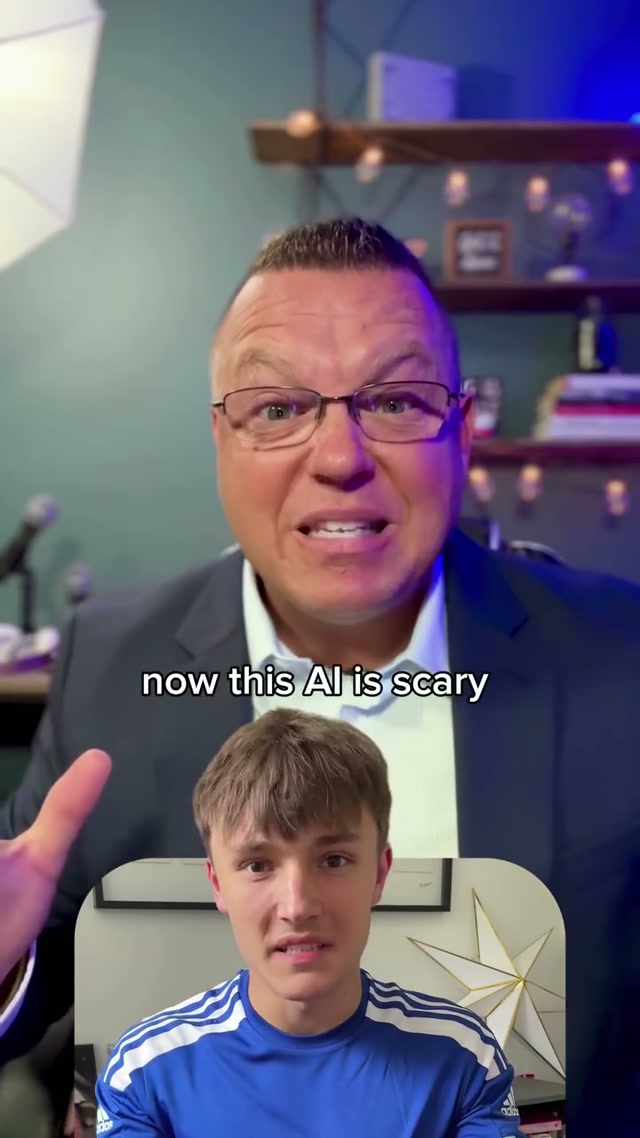
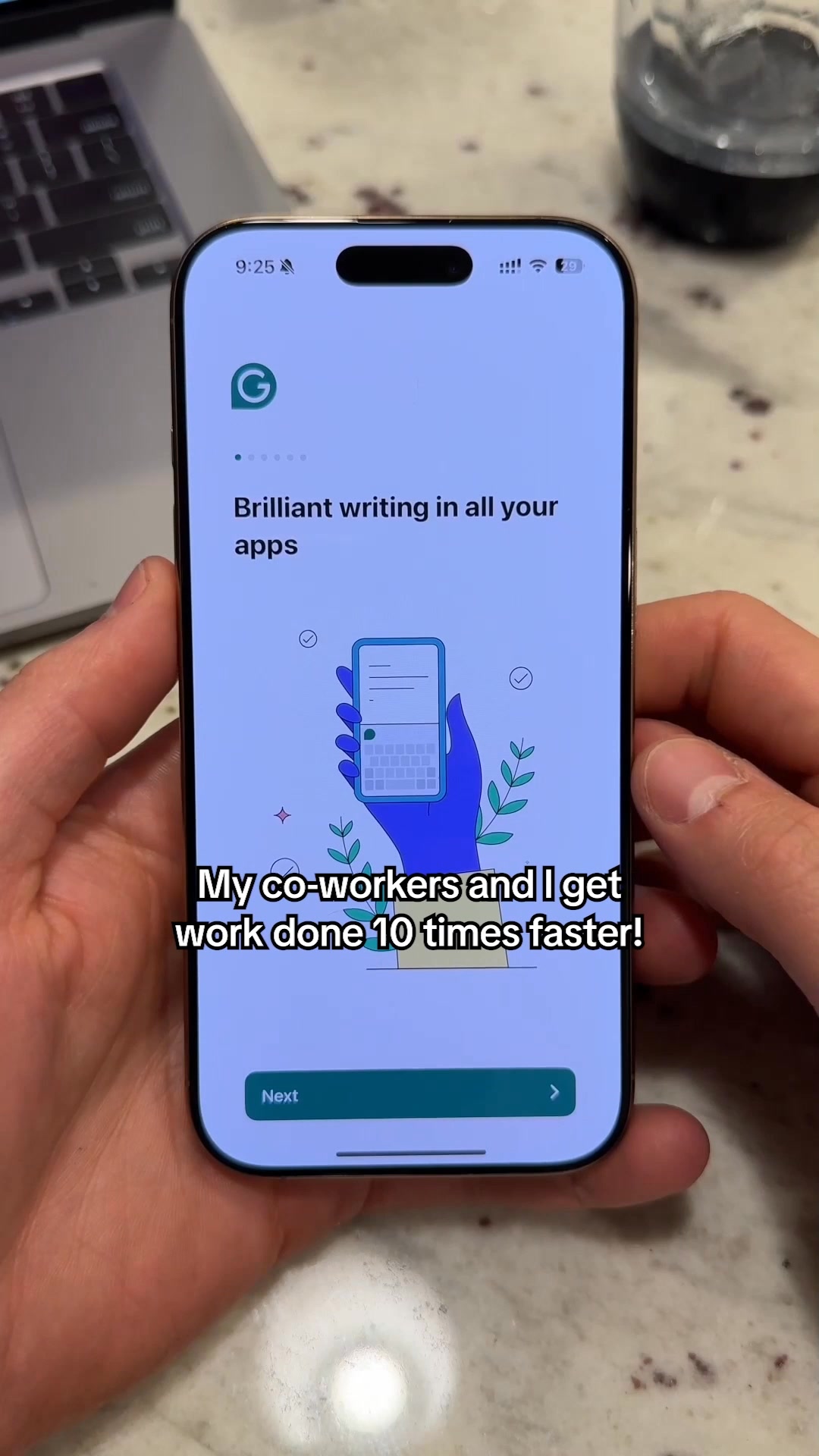
Beat 2 (0:00-0:04) — Unexpected Fact Start: It opens with a counterintuitive performance claim: “My co-workers and I get work done 10 times faster.” That extreme multiplier creates an immediate “wait, how?” reaction and primes the viewer to keep watching for the mechanism behind the number.
Beat 3 (0:04-0:10) — Expertise Claim: It makes a direct credibility claim: “Grammarly's AI keyboard is the most powerful writing tool I've ever used on my phone.” By stating it’s the “most powerful” and tying it to personal usage, the speaker positions the product as the best option from their own experience.
Beat 4 (0:10-0:20) — Feature Breakdown: It highlights a specific product capability: “built-in AI that catches mistakes as you type.” It then ties that feature to a concrete workflow benefit by stating “so no more switching between apps or copying and pasting.”
Beat 5 (0:20-0:27) — Metric Proof: The speaker provides a concrete performance claim: “I drafted three client emails… without a single typo.” The specific count (“three”) and the measurable quality outcome (“without a single typo”) function as proof that their process produces error-free work quickly.
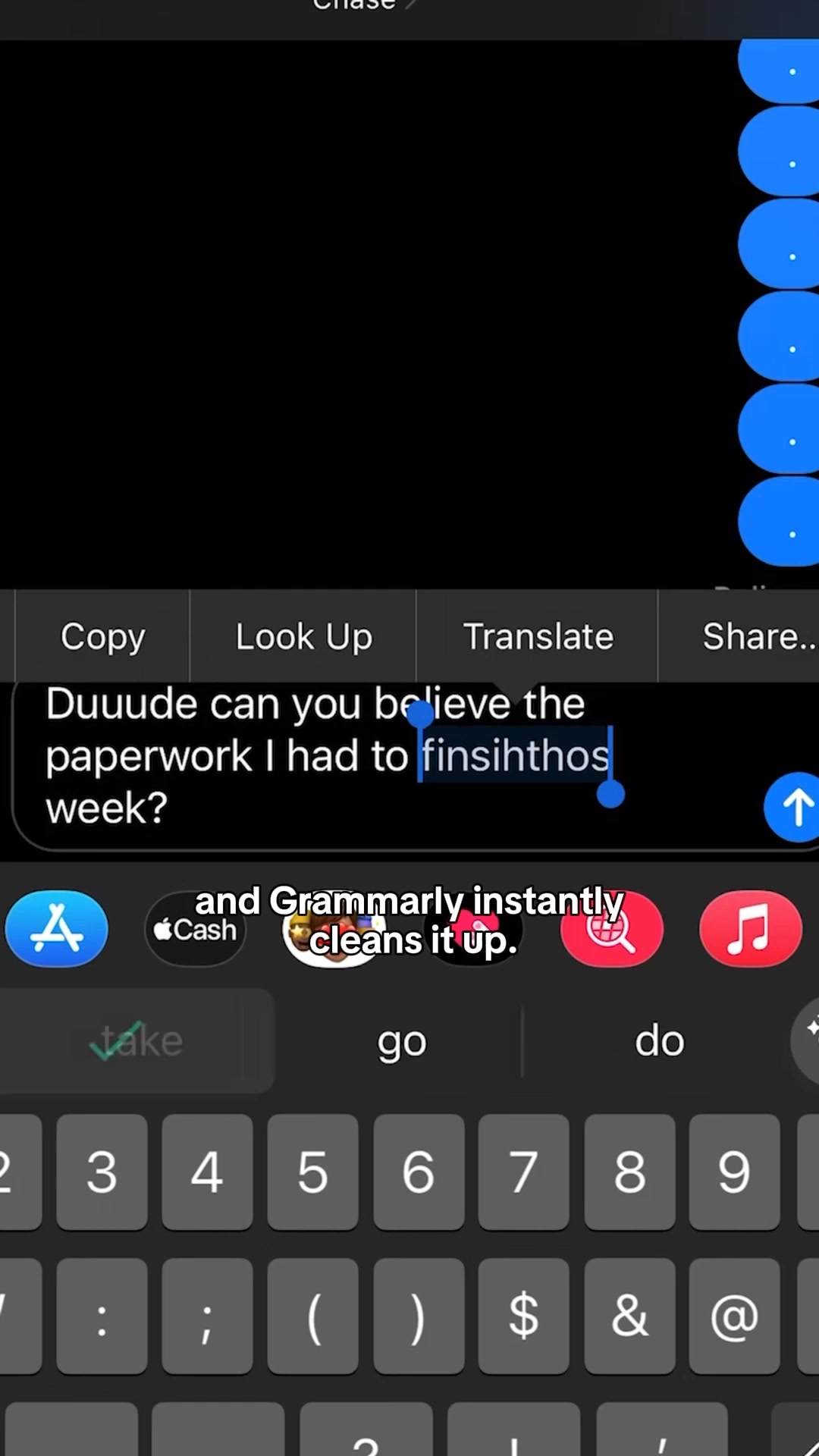
Beat 6 (0:27-0:36) — Function Demonstration: The speaker spotlights the “AI rewrite feature” and demonstrates its function: it “transforms your jumbled thoughts into perfect messages.” The line “look at this” cues an immediate reveal of the before/after effect so the viewer can see the transformation in action.
Beat 7 (0:36-0:41) — The Easy Way: It reveals an “easy way” to get professional results: the creator writes a rambling message, then taps “make it professional,” and instantly gets “clear, concise, and perfectly professional in seconds.” This reframes the task from effortful rewriting to a one-click transformation.
Beat 8 (0:41-0:45) — Redirect: It delivers a direct download instruction tied to a specific product: “Download the Grammarly AI keyboard right now—it's free and works with every app on your phone.” The beat converts the viewer’s interest into an immediate next action by pointing them to the app install.
Behavioral Psychology
This ad activates Social Validation as its primary behavioral mission. The viewer feels reassured by credible, real-world claims that others get major productivity gains and that the tool reliably produces professional, typo-free writing, making the download feel like a safe, proven choice. Social Validation behavioral mission
Structural Fingerprint
Duration: 45 seconds. Beat count: 7. Total cuts: 22. Average beat duration: 6.5s. Average cut duration: 2.9s. Average visual energy: 5.7/10.
Frequently Asked Questions
Why does this Grammarly ad work? This Grammarly talking head b-roll ad opens with a Unexpected Fact Start hook that captures attention in the first 3 seconds. The psychological architecture activates Social Validation across 7 structural beats, each contributing a specific persuasion mechanism.
What hook does Grammarly use in this ad? Grammarly opens with a Unexpected Fact Start hook. This leverages Unexpected Fact Start—an out-of-range claim (“10 times faster”) triggers cognitive dissonance and forces the viewer to resolve the mismatch by learning more. It also uses Specificity Bias: the exact quantity (“10 times”) feels concrete, so the brain treats it as testable and stays engaged to see whether the proof/method follows.
What psychology does this Grammarly ad activate? This ad activates Social Validation as its primary behavioral mission. The viewer feels reassured by credible, real-world claims that others get major productivity gains and that the tool reliably produces professional, typo-free writing, making the download feel like a safe, proven choice.
How long is this Grammarly ad and what's the structure? This ad runs 45 seconds with 7 structural beats and 22 cuts. Average cut duration is 2.9s. The pattern flow follows a full format structure common in talking head b-roll ads.
What platform is this Grammarly ad running on? This talking head b-roll ad is running on facebook. The saas & software vertical typically sees strong performance on this platform for talking head b-roll creative structures.
What makes this different from other saas & software ads? Most saas & software ads lean on generic format templates. Grammarly's version uses a distinct Unexpected Fact Start hook structure paired with Social Validation — a combination that over-indexes in high-performing saas & software creative.