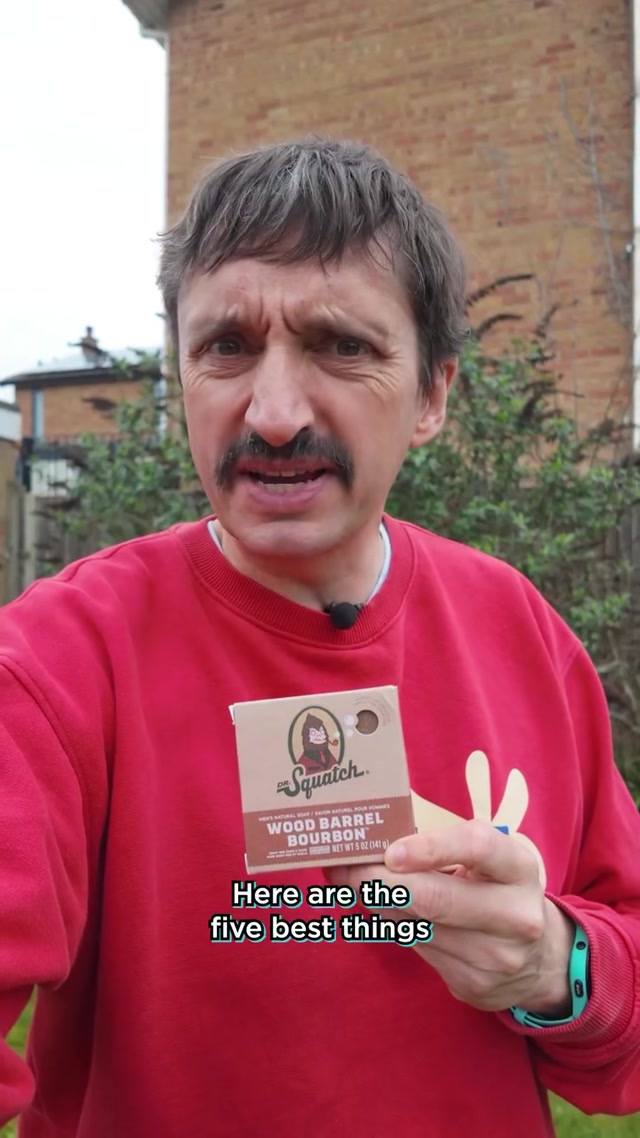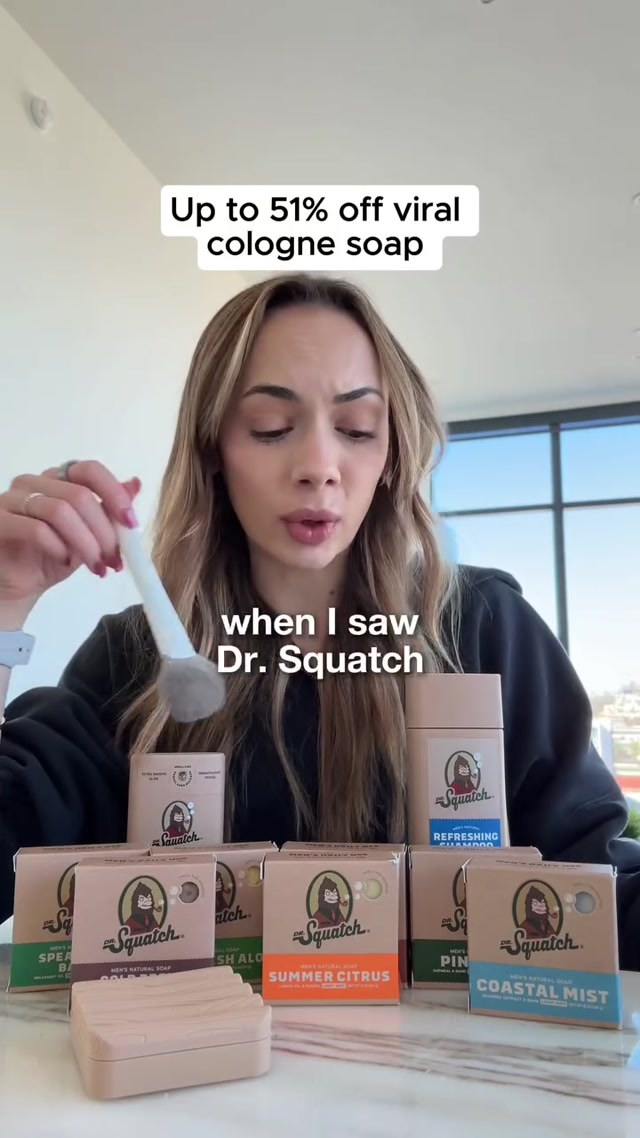
Dr. Squatch's talking head b-roll ad is a 39-second beauty & skincare video creative decoded by Heista into 7 structural beats with 20 total cuts. Dr. Squatch's full brand intelligence
PATTERNMAP™
Loading PatternMap...
Ad Blueprint
Talking Head B-Roll
CategoryBeauty Skincare
AngleOffer Urgency
NarrativeSocial Proof
IntentShareability Social Replication
Hook Type
Unexpected Fact Start
6.5sDuration
3Shots
2.7sAvg Shot
Energy
Cut Points
1.8s5.5s
Psychology
Social Validation
Behavioral ApproachSell Product Direct
Testimonial Reference
Social Norming
Consensus Cue
Every winning ad has a formula. Heista decodes it in seconds.
Dr. Squatch Ad Decoded — Unexpected Fact Start Hook Analysis (39s)
Dr. Squatch's talking head b-roll ad is a 39-second beauty & skincare creative decoded by Heista into 7 structural beats. It opens with a Unexpected Fact Start hook — This leverages Unexpected Fact Start by creating cognitive dissonance—scrolling is framed as a mistake that leads to a deal you can’t ignore. The “up to 51% off” detail activates Specificity Bias, making the offer feel concrete and real rather than vague, which increases the viewer’s urge to keep watching to see what happens next. The psychological mission is Social Validation: The viewer feels reassured by real-life style proof that the product works, making the purchase feel safer and more likely to deliver compliments and noticeable results. The ad has 20 cuts at an average of 2.1s per cut, with an average beat duration of 5.6s.
Key Takeaways
- Opens with a Unexpected Fact Start hook
- Activates Social Validation psychology
- Part of Dr. Squatch's full ad strategy
- 20 cuts, averaging 2.1s per cut
Overview
Unexpected Fact Start Hook
This leverages Unexpected Fact Start by creating cognitive dissonance—scrolling is framed as a mistake that leads to a deal you can’t ignore. The “up to 51% off” detail activates Specificity Bias, making the offer feel concrete and real rather than vague, which increases the viewer’s urge to keep watching to see what happens next. Unexpected Fact Start hook deep-dive
Beat-by-Beat Breakdown
Beat 2 (0:00-0:06) — Unexpected Fact Start: It opens with a counterintuitive admission: “I never should have scrolled when I saw Dr. Squatch…”. The unexpected part is that the “scroll” (usually harmless) immediately turns into a buying trigger because of the specific deal: “selling 10 bars and gifts for up to 51% off.”
Beat 3 (0:06-0:14) — Relatability Setup: The speaker sets up a relatable, real-life scenario: “I asked my co-worker what cologne he was wearing.” Then they add the surprising personal detail—“He told me he's never worn cologne in his life”—before naming the brand: “It was Dr. Squatch.” This frames the topic through everyday social interaction rather than expertise or theory, making the viewer feel like they’re hearing a casual story that could happen to them.
Beat 4 (0:14-0:20) — Loss Aversion Cue: It frames the purchase as a “missed-benefit” moment: “I saw this 51% off deal and I bought it,” implying the value is time-sensitive and slipping away. Then it heightens the payoff with “holy s***, my boyfriend has never smelled better,” making the deal feel like the difference between getting the win vs losing it.
Beat 5 (0:20-0:27) — Belief Break: The speaker breaks the assumption that “nobody told me” about the real outcome—then replaces it with a new, specific belief: “it makes your skin as soft as butter.” The moment they hear “he gets way too many compliments,” they conclude “I might have made a mistake,” flipping from uncertainty to a corrected interpretation of what’s happening.
Beat 6 (0:27-0:33) — Percentage Result: The speaker validates the offer by stacking a concrete discount claim: “up to 51% off.” They pair it with a bundle count (“10 bar soaps… and lip balm”) to make the deal feel specific and unusually valuable, then reinforce it with a quality assertion: “I am telling you it’s all natural clean stuff.”
Beat 7 (0:33-0:37) — Cost/Benefit Reframe: It delivers a cost/benefit reassurance: “If you're a guy, you won't regret it.” This frames the decision as low-risk and emotionally safe, so the viewer can mentally “approve” the choice without waiting for more details.
Beat 8 (0:37-0:39) — Open Loop: The close leaves the viewer with an implied, incomplete call-to-action (“(Closing CTA/remark implied)”) rather than a fully stated instruction. That missing specificity functions like an unfinished prompt, keeping the viewer mentally “waiting” for the missing piece.
Behavioral Psychology
This ad activates Social Validation as its primary behavioral mission. The viewer feels reassured by real-life style proof that the product works, making the purchase feel safer and more likely to deliver compliments and noticeable results. Social Validation behavioral mission
Structural Fingerprint
Duration: 39 seconds. Beat count: 7. Total cuts: 20. Average beat duration: 5.6s. Average cut duration: 2.1s. Average visual energy: 6.6/10.
Frequently Asked Questions
Why does this Dr. Squatch ad work? This Dr. Squatch talking head b-roll ad opens with a Unexpected Fact Start hook that captures attention in the first 3 seconds. The psychological architecture activates Social Validation across 7 structural beats, each contributing a specific persuasion mechanism.
What hook does Dr. Squatch use in this ad? Dr. Squatch opens with a Unexpected Fact Start hook. This leverages Unexpected Fact Start by creating cognitive dissonance—scrolling is framed as a mistake that leads to a deal you can’t ignore. The “up to 51% off” detail activates Specificity Bias, making the offer feel concrete and real rather than vague, which increases the viewer’s urge to keep watching to see what happens next.
What psychology does this Dr. Squatch ad activate? This ad activates Social Validation as its primary behavioral mission. The viewer feels reassured by real-life style proof that the product works, making the purchase feel safer and more likely to deliver compliments and noticeable results.
How long is this Dr. Squatch ad and what's the structure? This ad runs 39 seconds with 7 structural beats and 20 cuts. Average cut duration is 2.1s. The pattern flow follows a full format structure common in talking head b-roll ads.
What platform is this Dr. Squatch ad running on? This talking head b-roll ad is running on facebook. The beauty & skincare vertical typically sees strong performance on this platform for talking head b-roll creative structures.
What makes this different from other beauty & skincare ads? Most beauty & skincare ads lean on generic format templates. Dr. Squatch's version uses a distinct Unexpected Fact Start hook structure paired with Social Validation — a combination that over-indexes in high-performing beauty & skincare creative.