Caraway's talking head b-roll ad is a 50-second home & living video creative decoded by Heista into 7 structural beats with 25 total cuts. Caraway's full brand intelligence
PATTERNMAP™
Loading PatternMap...
Ad Blueprint
Talking Head B-Roll
CategoryHome Living
AngleAspirational Identity
NarrativeBenefit First
IntentProblem Agitate Solve
Hook Type
Direct Question Hook
5.8sDuration
2Shots
3.4sAvg Shot
Energy
Cut Points
4.6s
Psychology
Novelty Reward
Behavioral ApproachPeer Recommend
Pattern Break
Unexpected Fact
Novelty Spike
Micro Discovery
Every winning ad has a formula. Heista decodes it in seconds.
Caraway Ad Decoded — Direct Question Hook Analysis (50s)
Caraway's talking head b-roll ad is a 50-second home & living creative decoded by Heista into 7 structural beats. It opens with a Direct Question hook — This leverages Self-Referential Processing because the question forces the viewer to mentally check, “Is that me?” Right after, it uses Relief From Discomfort: the phrase “you don’t have to hide” reframes the problem as something solvable, which keeps attention through the anticipation of the reveal. The psychological mission is Novelty Reward: The viewer feels pleasantly surprised that a trash and recycling setup can be display-worthy and intentionally matched, resolving the “must hide it” assumption while rewarding continued attention with a clearer, better alternative. The ad has 25 cuts at an average of 2.2s per cut, with an average beat duration of 7.1s.
Key Takeaways
- Opens with a Direct Question hook
- Activates Novelty Reward psychology
- Part of Caraway's full ad strategy
- 25 cuts, averaging 2.2s per cut
Overview
Direct Question Hook
This leverages Self-Referential Processing because the question forces the viewer to mentally check, “Is that me?” Right after, it uses Relief From Discomfort: the phrase “you don’t have to hide” reframes the problem as something solvable, which keeps attention through the anticipation of the reveal. Direct Question hook deep-dive
Beat-by-Beat Breakdown
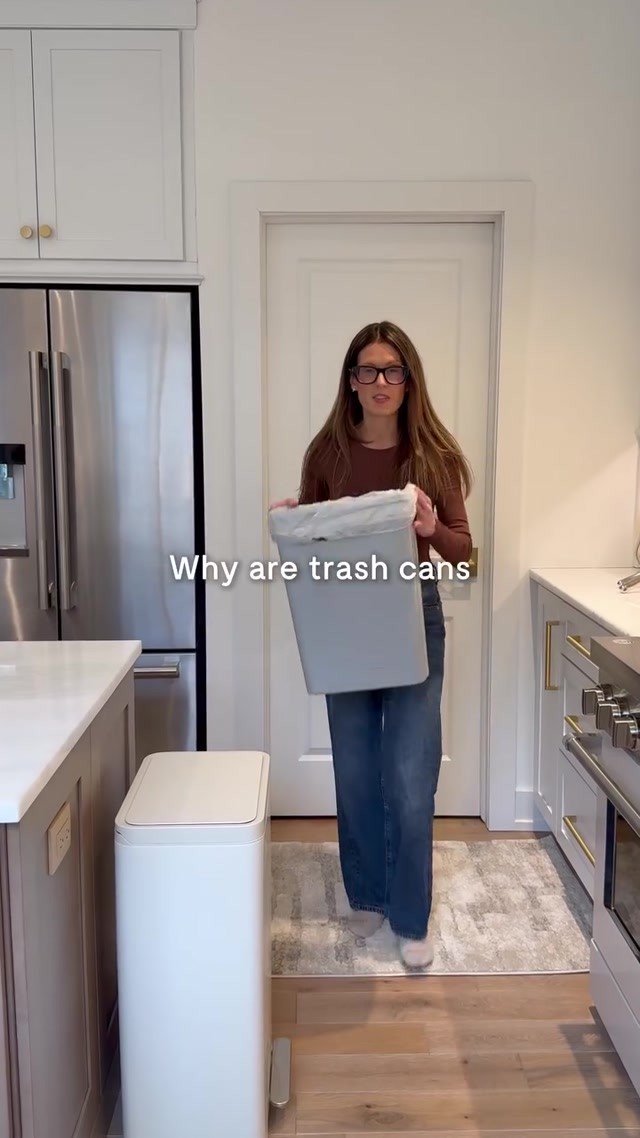
Beat 2 (0:00-0:05) — Direct Question Hook: It starts with a direct self-relevance question: “Are you hiding your trash can under the sink?” then immediately flips the frame into a relief promise: “Well, I finally found one that you don't have to hide.” This turns the viewer into an active subject (their situation) before the video even offers the solution.
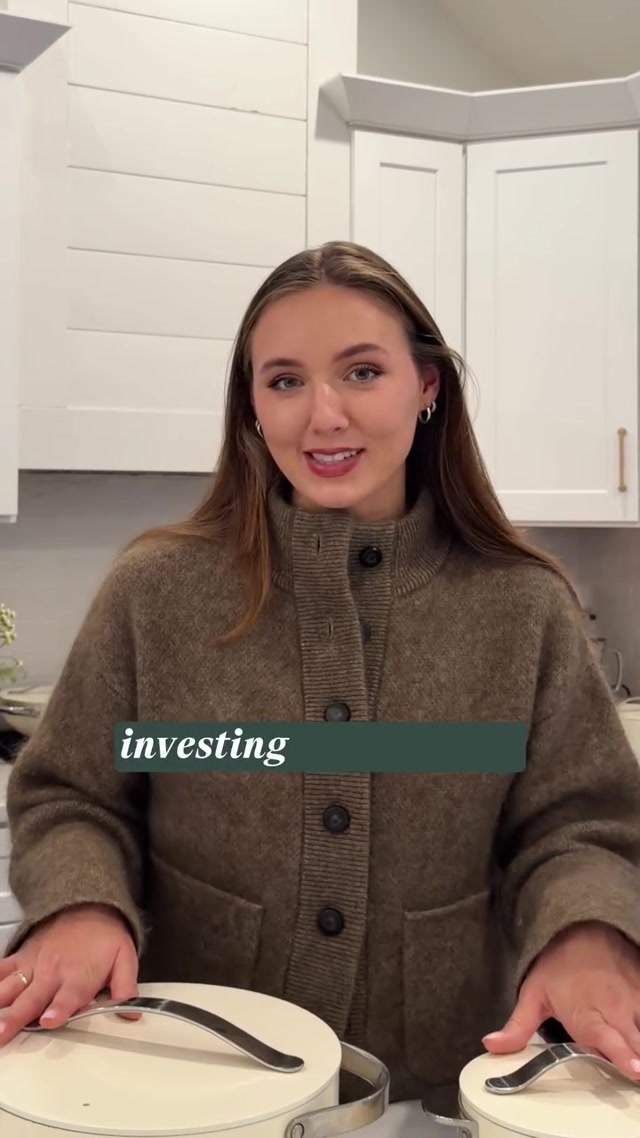
Beat 3 (0:05-0:14) — Relatability Setup: It ties the message to a shared emotional investment by saying, “I’ve invested so much into my kitchen design,” listing the high-effort parts (“The cookware, the storage, the details”). Then it acknowledges the frustration with a specific letdown: “but my old trash can completely ruined the vibe.”
Beat 4 (0:14-0:18) — Inefficiency Pain: It highlights wasted effort and a “keep it hidden because it’s ugly” workaround — “I've always kept my trash can under the sink… they're just ugly. But not anymore.” This frames the viewer’s current setup as an inefficient, temporary solution that’s being replaced, creating tension about the ongoing friction of hiding an eyesore.
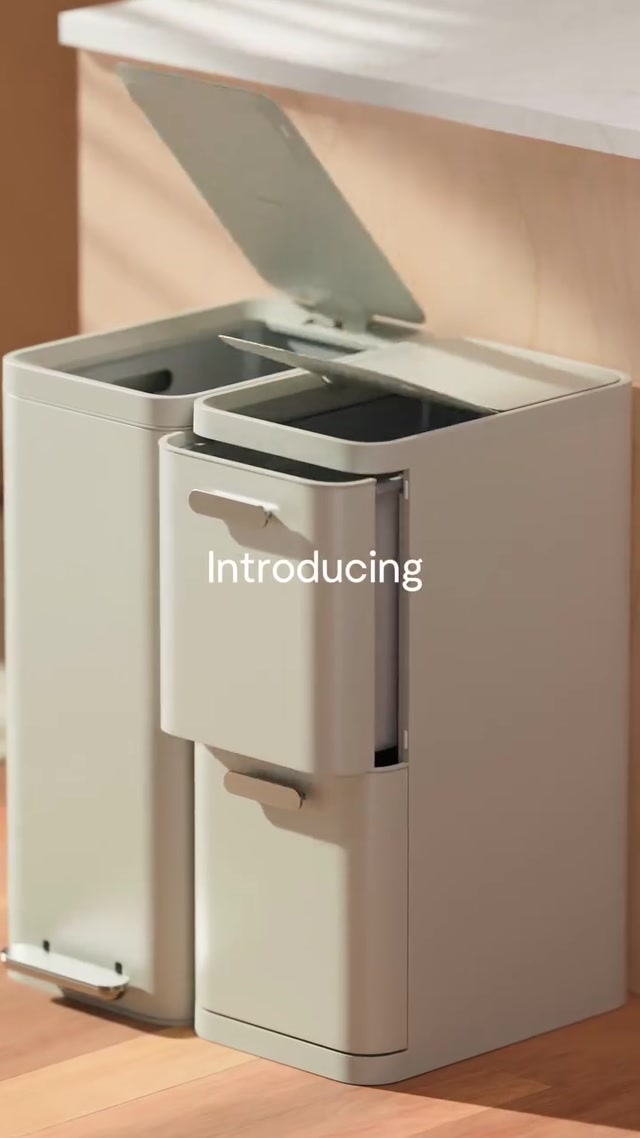
Beat 5 (0:18-0:30) — Feature Cascade: It stacks a rapid list of product features as a value-dense pitch: “Furniture inspired… designed to be displayed, not hidden… matches my kitchen aesthetic… I love the finish… hardware is great quality… recycling setup is built in… There aren't any mismatched bins shoved in a corner.” This makes the viewer mentally “scan” multiple benefits in one pass rather than waiting for one main claim.
Beat 6 (0:30-0:37) — Before/After Proof: It uses contrast as validation: “Trash and recycling live together” is the expectation mismatch, then “and still look intentional” delivers the recovered outcome. This frames the method as something that fixes a normally “messy” pairing so the result looks deliberate.
Beat 7 (0:37-0:44) — 'Actually' Reframe: The beat uses an “actually” correction to reframe a trash-can purchase from a purely utilitarian purchase into a space-enhancing design feature: “Now it sits right here in the kitchen and actually elevates the space.” It also expands the reframe into an identity-style claim about what it “should” be: “This is what a trash can and recycling system should look like. Display worthy.”
Beat 8 (0:44-0:50) — Redirect: It pairs a benefit claim with a direct shop action: “The trash can that elevates your aesthetic. Shop now.” The phrase “Shop now” is the explicit redirect that sends viewers to purchase immediately.
Behavioral Psychology
This ad activates Novelty Reward as its primary behavioral mission. The viewer feels pleasantly surprised that a trash and recycling setup can be display-worthy and intentionally matched, resolving the “must hide it” assumption while rewarding continued attention with a clearer, better alternative. Novelty Reward behavioral mission
Structural Fingerprint
Duration: 50 seconds. Beat count: 7. Total cuts: 25. Average beat duration: 7.1s. Average cut duration: 2.2s. Average visual energy: 6.3/10.
Frequently Asked Questions
Why does this Caraway ad work? This Caraway talking head b-roll ad opens with a Direct Question hook that captures attention in the first 3 seconds. The psychological architecture activates Novelty Reward across 7 structural beats, each contributing a specific persuasion mechanism.
What hook does Caraway use in this ad? Caraway opens with a Direct Question hook. This leverages Self-Referential Processing because the question forces the viewer to mentally check, “Is that me?” Right after, it uses Relief From Discomfort: the phrase “you don’t have to hide” reframes the problem as something solvable, which keeps attention through the anticipation of the reveal.
What psychology does this Caraway ad activate? This ad activates Novelty Reward as its primary behavioral mission. The viewer feels pleasantly surprised that a trash and recycling setup can be display-worthy and intentionally matched, resolving the “must hide it” assumption while rewarding continued attention with a clearer, better alternative.
How long is this Caraway ad and what's the structure? This ad runs 50 seconds with 7 structural beats and 25 cuts. Average cut duration is 2.2s. The pattern flow follows a full format structure common in talking head b-roll ads.
What platform is this Caraway ad running on? This talking head b-roll ad is running on facebook. The home & living vertical typically sees strong performance on this platform for talking head b-roll creative structures.
What makes this different from other home & living ads? Most home & living ads lean on generic format templates. Caraway's version uses a distinct Direct Question hook structure paired with Novelty Reward — a combination that over-indexes in high-performing home & living creative.